


Was ist Tatreez? Palästinensische Stickerei erklärt
Tatreez ist traditionelle palästinensische Stickkunst — eine Form des Kreuzstichs, die seit Generationen von Müttern an ihre Töchter weitergegeben wird. An Motiven und Farben ließ sich früher auf einen Blick erkennen, aus welchem Dorf und welcher Region eine Frau stammte und in welcher Lebensphase sie sich befand. 2021 nahm die UNESCO die palästinensische Stickkunst in die Repräsentative Liste des immateriellen Kulturerbes der Menschheit auf.
Das ist die kurze Antwort. Was Tatreez wirklich ist — eine Sprache, ein Archiv und ein in Faden gesticktes Erbe — braucht etwas mehr Zeit. Dieser kulturelle Leitfaden wurde mit großer Sorgfalt verfasst.
Was ist Tatreez?
Tatreez ist zunächst das arabische Wort für Stickerei. In Palästina bezeichnet es jedoch eine ganz bestimmte Tradition: den gezählten Kreuzstich, der häufig Fallahi, also Bauernstich, genannt wird und seit Generationen von Frauen in den Dörfern der Region ausgeübt wird. Mit farbenfrohem Baumwoll- oder Seidengarn auf Stoff gearbeitet, verzierte er Kissen, Schleier und vor allem den Thobe: das lange bestickte Kleid, das bis heute als eines der bekanntesten Kleidungsstücke des palästinensischen Kulturerbes gilt.
Thobes für den Alltag wurden mit Baumwollgarn bestickt, Modelle für Hochzeiten und besondere Anlässe mit Seide. Ein vollständig bestickter Thobe erfordert monatelange geduldige Arbeit. Auch deshalb wurde jedes Stück geschätzt, aufbewahrt und weitervererbt.
Eine Sprache aus Fäden
Bevor Tatreez als Kunst bezeichnet wurde, übermittelte es Informationen. Die Motive, die eine Frau stickte — Zypressen, Vögel, Monde, Blumen, Sterne und Formen aus ihrer alltäglichen Umgebung — sowie die gewählten Farben konnten ihr Dorf, ihre Region und ihren gesellschaftlichen oder familiären Stand erkennen lassen. Die Muster unterschieden sich von Dorf zu Dorf. Eine bestickte Brustpartie funktionierte daher beinahe wie eine in Faden geschriebene Adresse.
Das Wissen wurde auf dieselbe Weise weitergegeben wie das Handwerk selbst: von der Mutter an die Tochter und in Kreisen gemeinsam stickender Frauen. Tatreez wird oft als Form des kollektiven Gedächtnisses beschrieben. Genau das ist es — Landschaft, Geschichten und Identität eines Ortes, Stich für Stich festgehalten.
Wie Tatreez das Jahr 1948 überlebte
Die Nakba von 1948 vertrieb Hunderttausende Palästinenserinnen und Palästinenser aus ihren Dörfern und zerstreute damit auch die lebendige Karte der regionalen Sticktraditionen. Unzählige kostbare Stücke gingen verloren. Doch die Praxis selbst verschwand nicht. Im Exil und in Flüchtlingslagern stickten Frauen weiter. Aus einem alltäglichen Handwerk wurde ein Ausdruck von Erinnerung und Identität.
In den 1970er- und 1980er-Jahren erlebte Tatreez eine bewusste Wiederbelebung. In Flüchtlingslagern entstanden Stickwerkstätten, die Vermittlung des Handwerks wurde zu einer Form kultureller Bewahrung und die Arbeit gab Frauen Einkommen, Gemeinschaft und eine Möglichkeit, ihre Dörfer mit sich zu tragen. Die Stickkunst wurde zu einer der stillsten und zugleich beständigsten Formen des Festhaltens.
Anerkennung und lebendige Wiederbelebung
Im Dezember 2021 nahm die UNESCO die Kunst der Stickerei in Palästina in ihre Repräsentative Liste des immateriellen Kulturerbes der Menschheit auf. Damit erhielt offiziell Anerkennung, was palästinensische Frauen längst wussten: Dieses Erbe ist schützenswert.
Heute ist die Tradition deutlich sichtbar und lebendig. In Palästina und in der Diaspora treffen sich Tatreez-Kreise, in denen Frauen gemeinsam die Motive ihrer Heimatorte sticken. Junge Designerinnen übertragen die Muster auf zeitgenössische Kleidung, Museen zeigen jahrhundertealte Thobes neben neuen Arbeiten und Lehrende auf mehreren Kontinenten geben die Stiche an eine Generation weiter, die diese Sprache nicht verblassen lassen will.
Die Haltung von JAIDA
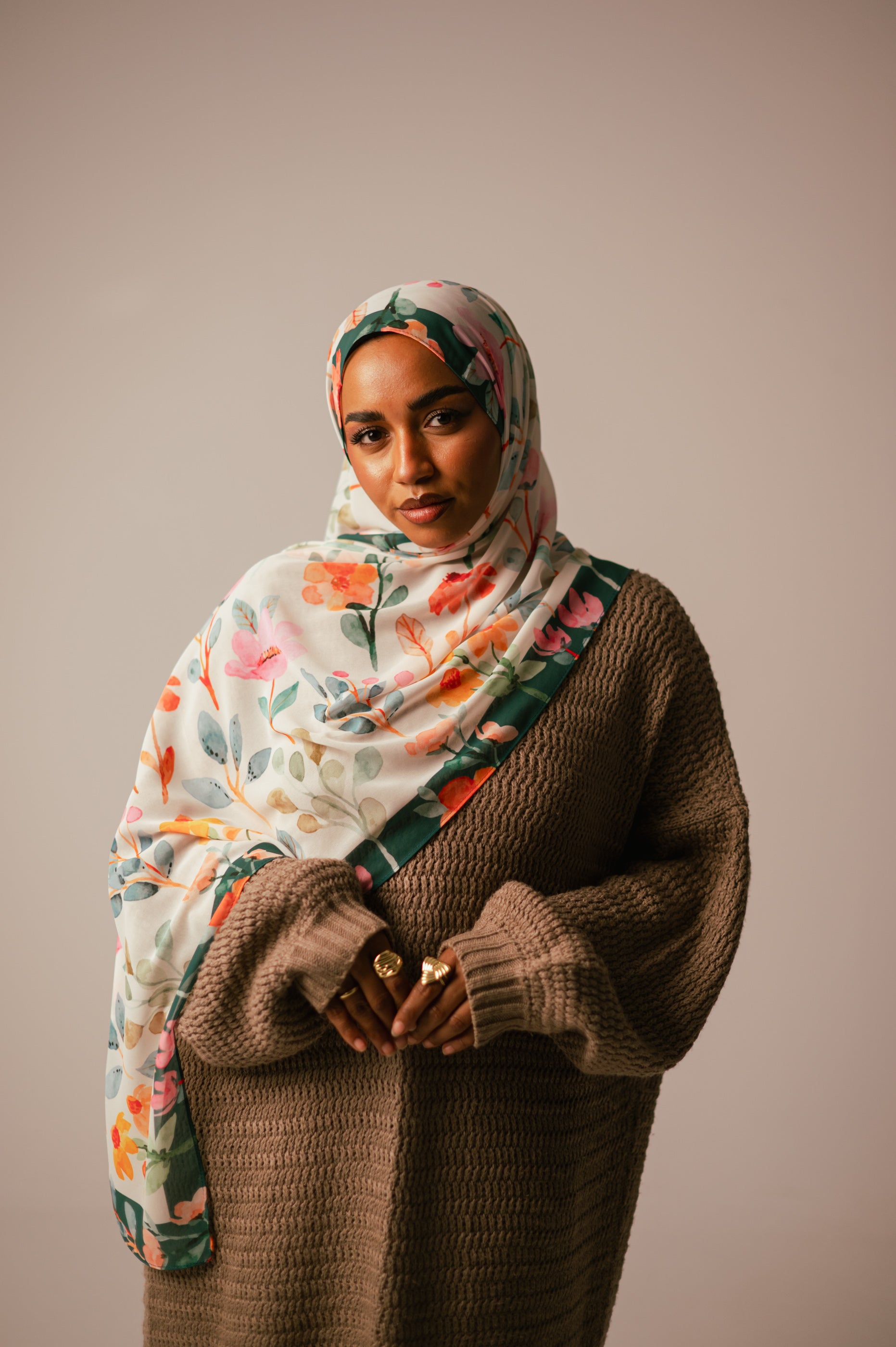
Wir möchten etwas eindeutig klarstellen, denn Klarheit ist eine Form des Respekts: Unser Palestine Edit ist kein Tatreez. Unsere Stücke — etwa der Olivenblüten-Druck von Blooms of Hope — sind eigens entworfene Illustrationen, die das palästinensische Kulturerbe würdigen. Es handelt sich nicht um handgefertigte Stickereien.
Wenn du echten Tatreez suchst, kaufe ihn von den Menschen, die die Tradition lebendig halten. Palästinensische Stickerinnen und Frauenkooperativen in Palästina und in der Diaspora verkaufen handbestickte Stücke. Jeder Kauf unterstützt das Handwerk an seiner Quelle. Lerne die Stiche, wenn du kannst, und nenne die Tradition, wenn du sie trägst. So bleibt ein lebendiges Erbe lebendig.
Häufig gestellte Fragen
Was bedeutet Tatreez?
Tatreez ist das arabische Wort für Stickerei. Der Begriff bezeichnet insbesondere die traditionelle palästinensische Kreuzstichkunst, die seit Generationen ausgeübt wird, vor allem auf dem Thobe, dem langen bestickten Kleid. Als Handwerk und Ausdruck von Identität wird sie von Müttern an ihre Töchter weitergegeben.
Was stellen Tatreez-Motive dar?
Die Motive entstammen der alltäglichen Umgebung — Zypressen, Vögel, Monde, Blumen und Sterne. Ihre Kombinationen und Farben ließen historisch das Dorf, die Region und den gesellschaftlichen oder familiären Stand einer Frau erkennen. Jede Region Palästinas entwickelte eigene Muster, wodurch die Stickerei zu einer visuellen Sprache des Ortes wurde.
Ist Tatreez von der UNESCO anerkannt?
Ja. Im Dezember 2021 nahm die UNESCO die Kunst der Stickerei in Palästina in ihre Repräsentative Liste des immateriellen Kulturerbes der Menschheit auf. Damit wurde Tatreez als lebendiges Erbe anerkannt, das für kommende Generationen bewahrt werden soll.
Wie lange dauert die Herstellung eines Tatreez-Stücks?
Kleine handbestickte Stücke benötigen mehrere Stunden bis Tage; ein vollständig bestickter Thobe kann monatelange Arbeit bedeuten. Die investierte Zeit gehört zur Bedeutung der Tradition: Jedes Stück trägt die Geduld und das Können seiner Schöpferin in sich.
Wie kann ich Tatreez-Kunsthandwerkerinnen unterstützen?
Kaufe direkt bei palästinensischen Stickerinnen und Frauenkooperativen in Palästina und in der Diaspora, damit der Wert bei den Menschen ankommt, die die Arbeit leisten. Ein Kurs, die Teilnahme an einem Tatreez-Kreis und die korrekte Nennung der Tradition beim Tragen oder Teilen helfen ebenfalls, das Handwerk lebendig zu halten.
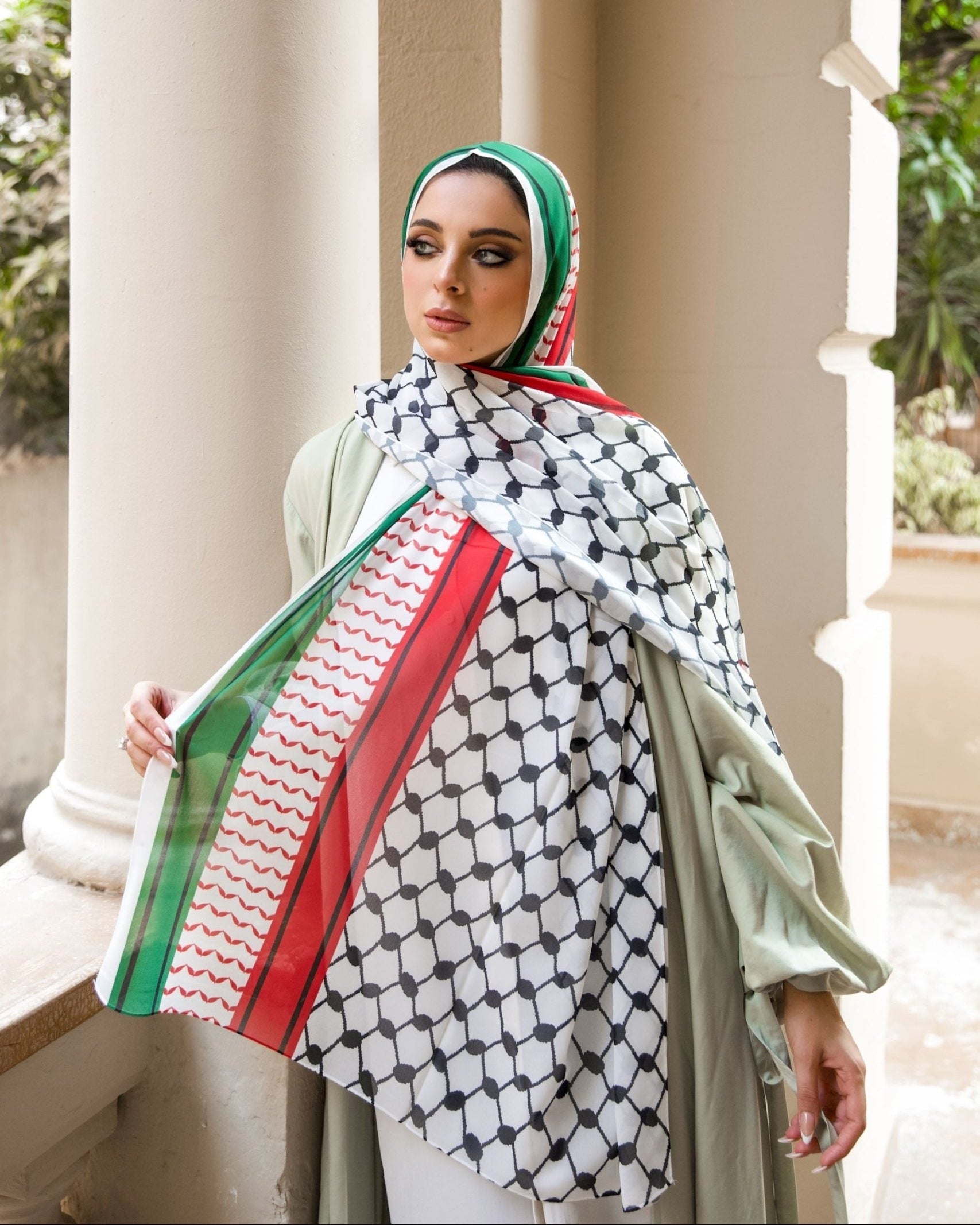
Der Keffiyeh erzählt eine verwandte Geschichte, allerdings gewebt statt gestickt. Unser Leitfaden über die Bedeutung des Keffiyeh-Musters erzählt sie.
Hast du Fragen zu den Geschichten hinter unseren Mustern? Schreib uns auf Instagram unter @myjaida. 🤍

Hinterlasse einen Kommentar
Diese Website ist durch hCaptcha geschützt und es gelten die allgemeinen Geschäftsbedingungen und Datenschutzbestimmungen von hCaptcha.