


Moscheebesuch als Nicht-Muslim: Was anziehen und beachten?
If you are a non-Muslim woman visiting a mosque, you will generally be asked to cover your hair with a scarf in the prayer area, dress modestly with covered arms and legs, and remove your shoes before entering. It is about respect, not a test, and mosques are usually warm and welcoming to visitors. A simple, light scarf draped loosely over your hair is all you need.
Visiting a mosque for the first time, whether as a tourist, a guest at a wedding or funeral, a student, or simply out of curiosity, can feel a little daunting if you are not sure of the etiquette. The good news is that it is straightforward, and mosques are accustomed to welcoming respectful visitors. This guide walks you through exactly what to wear, how to cover your hair if you never have, and how to behave, so you can visit with confidence.
Do I need to wear a hijab or headscarf?
If you are a woman, yes, you will generally be asked to cover your hair with a scarf in the prayer area, whether or not you are Muslim. This is not an attempt to convert you or impose a belief; it is simply the custom for that space, in the same way some churches ask visitors to cover shoulders or remove hats. It is a small, kind gesture of respect.
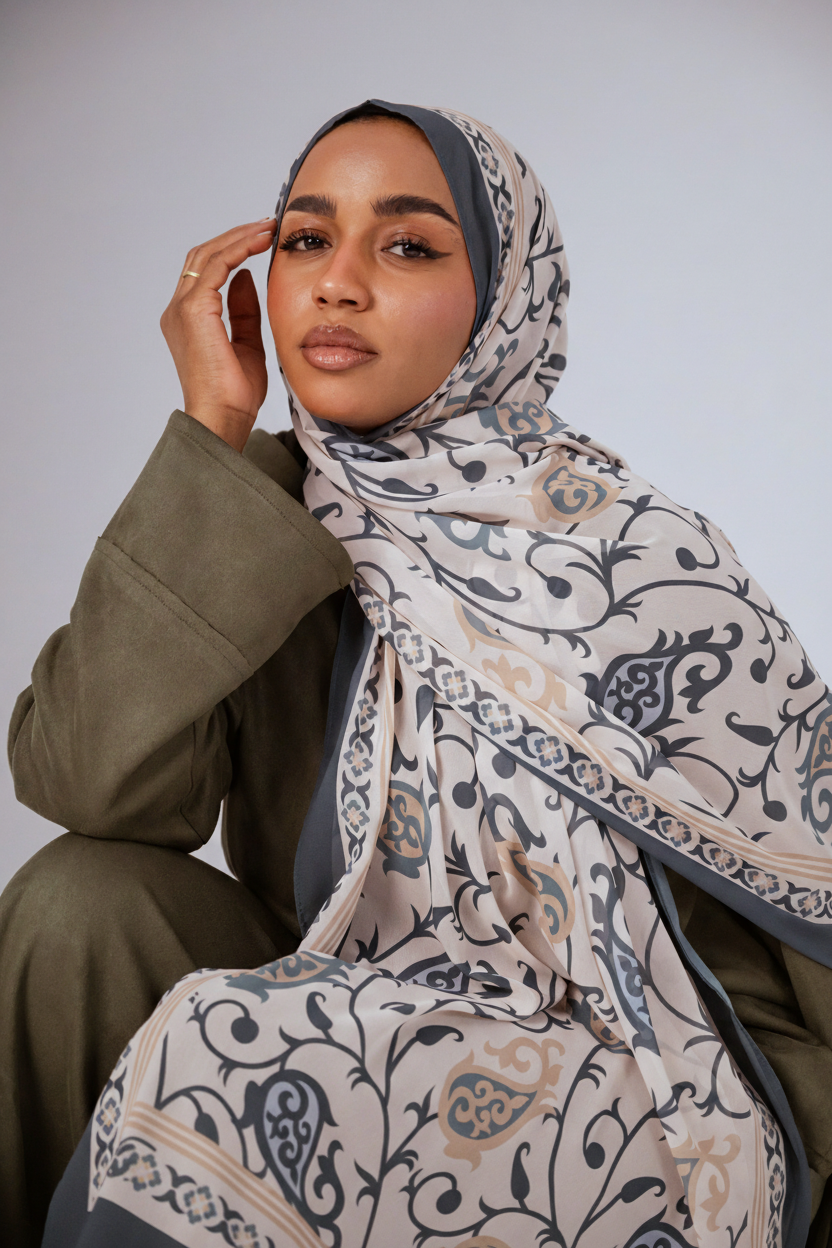
You do not need anything elaborate. A light, plain scarf draped over your hair so it is covered is perfectly enough; it does not have to be tightly wrapped or styled. Many mosques keep a few scarves to borrow at the entrance, but bringing your own means you have something you are comfortable in, in a colour you like.
What should I wear to visit a mosque?
Modest, comfortable, and respectful is the whole idea. For everyone, regardless of gender:
- Cover your arms and legs. Long sleeves or covered shoulders, and long trousers or a long skirt. Avoid shorts, short skirts, and sleeveless tops.
- Keep clothing loose. Flowing rather than tight or form-fitting is more in keeping with the setting.
- Wear clothes you can easily remove your shoes in, and clean socks, since you will be on carpeted floors and may sit on the floor.
- Women: bring a scarf for your hair, as above.
If you are attending a specific occasion like a funeral, leaning toward darker, subdued colours is thoughtful. For a general visit, any modest, respectful outfit is fine.

Simple, light, easy to drape
A Soft Neutral Scarf
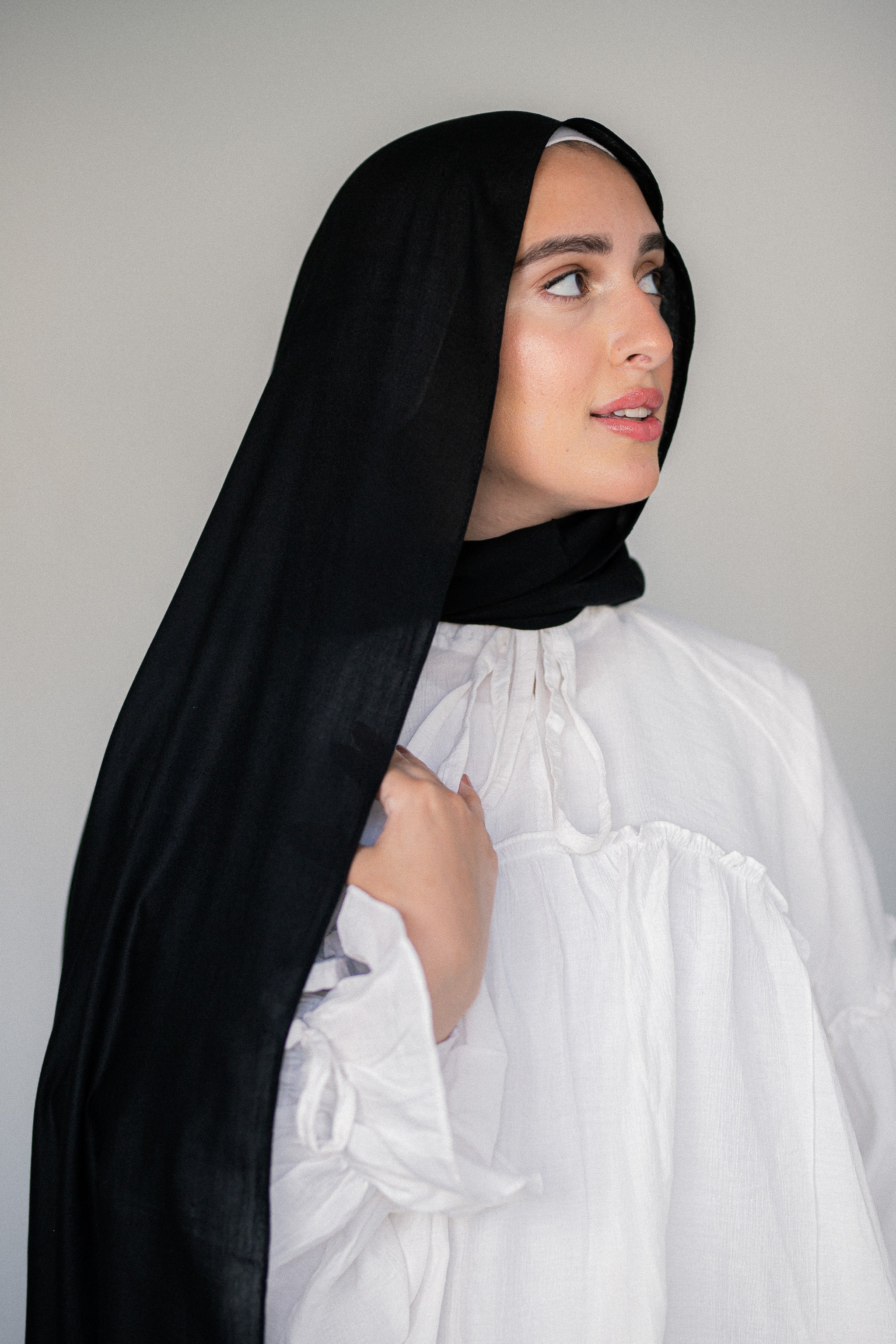
If you would like your own scarf to bring, a light chiffon in a soft neutral is the easiest to drape loosely over your hair and slips on and off in seconds at the entrance. Simple, respectful, and yours to keep.
Shop a Soft Chiffon Scarf →How do I wear the scarf if I have never done it?
It is much simpler than it looks, and nobody expects a perfect wrap from a visitor. Here is the easiest way:
- Drape the scarf over your head, roughly centred, so it covers your hairline and hair.
- Let the two ends fall down over your shoulders, or bring them loosely together under your chin.
- Adjust gently so your hair is covered and the scarf feels comfortable. It does not need to be tight.
- That is it. Loose and respectful is exactly right; you are not expected to style it elaborately.
A lightweight chiffon or cotton scarf is the easiest to manage, since it drapes softly and stays put without much fuss. If you would like to see a slightly neater everyday method, our beginner guide to wearing a hijab shows a simple wrap step by step.
What is the etiquette once I am inside?
A few simple courtesies cover almost everything. Mosques are calm, communal spaces, and respectful behaviour is all that is asked.
- Remove your shoes before stepping onto the carpeted prayer area, and place them on the shelves provided.
- Speak quietly. It is a place of worship and reflection, so keep your voice low.
- Do not walk in front of anyone who is praying. Pass behind them instead.
- Ask before taking photos. Some mosques welcome it, others prefer not during prayer; a quick question avoids any awkwardness.
- Follow the lead of others, and do not feel you have to take part in prayer; observing quietly and respectfully is completely fine.
Prayer areas are sometimes separated by gender, so if someone gently directs you to a particular area, that is why. If you are ever unsure where to go or what to do, just ask; mosque staff and volunteers are usually delighted to help a respectful visitor.
When is a good time to visit?
For a calmer first visit, many people prefer to come between the five daily prayer times, when the mosque is quieter and someone may have time to show you around. Some mosques hold open days or offer tours, which are a wonderful, low-pressure way to visit. If you can, a quick call or message ahead lets you ask about visiting hours and any specifics for that mosque.
If you are attending for a specific event, a funeral, a wedding, a community gathering, simply arrive a little early, dress as above, and follow the lead of those around you.
What should I expect?
Most visitors are surprised by how welcoming the experience is. You will likely find a peaceful, beautiful space and people happy that you came with respect and curiosity. You will not be pressured about faith; a respectful visit is valued for exactly what it is. Lead with kindness and openness, and a mosque visit is almost always a warm and memorable one.
If you have broader questions about hijab and related customs, our honest hijab FAQ answers many of the things people are often too shy to ask.
The bottom line
Visiting a mosque as a non-Muslim is simple and welcomed: dress modestly with arms and legs covered, women cover their hair with a light scarf in the prayer area, everyone removes their shoes, and you keep quiet and respectful inside. Bring your own soft scarf if you would like one you are comfortable in, follow the lead of those around you, and do not worry about getting everything perfect. Respect and good intent are what matter, and they are always appreciated.
JAIDA is a Canadian hijab studio, and every piece ships same-day from Ontario, with free shipping over $99 CAD in Canada and over $75 USD to the United States, and free 30-day returns.
Planning a visit and have a question? Send us a message on @myjaida and we will gladly help. 🤍
Frequently asked questions
Do non-Muslim women have to wear a hijab in a mosque?
Yes, women are generally asked to cover their hair with a scarf when entering the prayer area of a mosque, whether they are Muslim or not. It is a sign of respect rather than a religious requirement placed on you. A simple, lightweight scarf draped loosely over the hair is all you need, and many mosques keep some to borrow at the entrance.
What should a non-Muslim wear to visit a mosque?
Dress modestly: long sleeves or covered shoulders, long trousers or a long skirt, and clothing that is loose rather than tight. Women also cover their hair with a scarf in the prayer area. Everyone removes their shoes before entering. Avoid shorts, short skirts, and sleeveless or revealing tops out of respect.
How do I wear a headscarf to a mosque if I never have before?
Drape a light scarf over your head so it covers your hair, bring the two ends down and let them fall over your shoulders or loosely cross them at your neck. It does not need to be tight or perfectly styled, just enough to cover your hair respectfully. A lightweight chiffon or cotton scarf is easiest to manage.
Do I have to take my shoes off in a mosque?
Yes. Everyone removes their shoes before entering the carpeted prayer area, as the space is kept clean for prayer. There are usually shelves or a rack by the entrance. Wearing clean socks is a good idea, since you will be walking and possibly sitting on the floor.
Can non-Muslims go inside a mosque?
Yes, most mosques warmly welcome respectful non-Muslim visitors, and many offer tours or open days. Dress modestly, cover your hair if you are a woman, remove your shoes, and be quiet and respectful during prayer times. If unsure, ask at the entrance, where someone is usually happy to guide you.
What should I avoid doing when visiting a mosque?
Avoid walking in front of people who are praying, taking photos without asking, talking loudly, and entering the prayer area in shoes or immodest clothing. Avoid visiting during the busiest prayer times unless you are there to observe respectfully. When in doubt, follow what other visitors are doing and ask if unsure.
Is it okay to visit a mosque during prayer?
It can be, if you are quiet and respectful and stay to the back or side, but many visitors prefer to come between prayer times for a calmer visit. If you arrive during prayer, wait quietly and avoid walking in front of those praying. Asking the mosque about good visiting times beforehand helps.

Hinterlasse einen Kommentar
Diese Website ist durch hCaptcha geschützt und es gelten die allgemeinen Geschäftsbedingungen und Datenschutzbestimmungen von hCaptcha.