
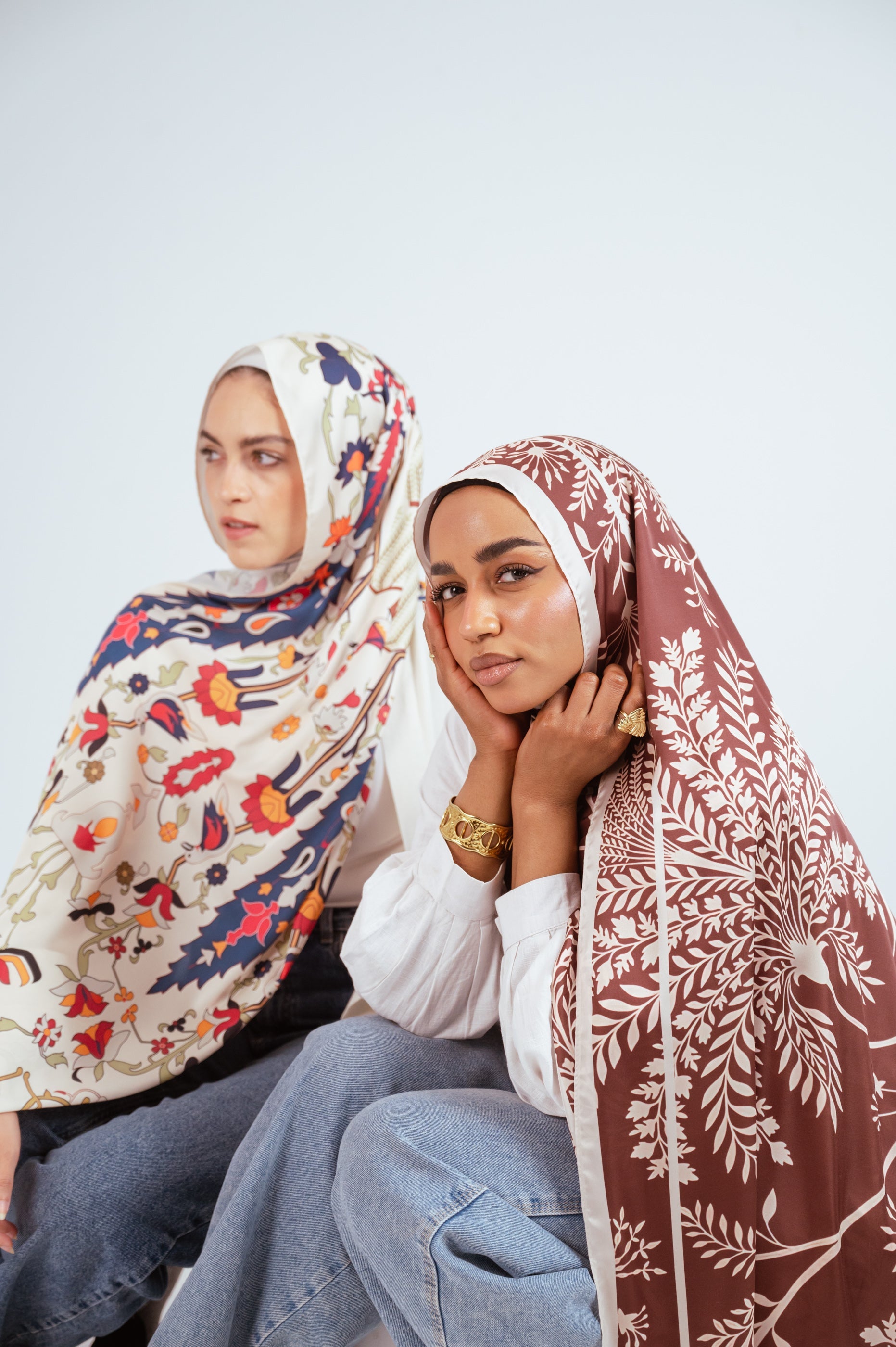
How to Wear a Hijab for Beginners: 3 Simple Styles That Stay All Day (2026 Step-by-Step Guide)
To wear a hijab for the first time: start with a non-slip underscarf as your foundation, choose a 200 × 70 cm chiffon or modal cotton hijab, place the fabric on your head with one side longer than the other, secure under your chin, then drape the longer side across your chest and over the opposite shoulder. The whole process takes under 60 seconds once you've practiced it twice.
Start with a soft scarf and a comfortable base

Morning Sky – Modal Cotton Hijab
A powder blue modal cotton option for soft, relaxed draping.
View product →
Jaida Inner Silk Under-scarf (Undercap)
An adjustable tie-back undercap with a silk-touch finish; check the fit with your wrap.
View product →Whether you're putting on a hijab for the first time, returning to it after a break, or helping someone get started, this guide covers everything you need: what to buy first, how to prepare, three foundational styles, and the small details that separate "this keeps falling off" from "I forgot I was wearing it."
Before you start: what every beginner needs
You can wear a hijab with nothing but a single piece of fabric — women have done it for generations. But if you're new and want it to stay put, three things make the entire difference.
1. The right fabric
Beginners often start with the wrong fabric and conclude that hijabs slip. They don't — the wrong fabric does.
- Start with modal cotton if you want the easiest first hijab. Modal cotton has a matte finish that grips naturally, stays opaque on its own, and forgives styling mistakes. Browse JAIDA modal cotton hijabs →
- Try matte chiffon next once you've got the basic wrap down. JAIDA chiffon has a non-slip matte weave (unlike the slippery satin-chiffon you'll find at fast-fashion stores). Browse JAIDA chiffon hijabs →
- Avoid satin and shiny polyester as a first hijab. They look beautiful but slide constantly without the right foundation.
2. A non-slip underscarf
This is the single biggest mistake new hijabis make: skipping the underscarf. Without one, your hijab slides on your hair, your hair slides on the underscarf, and you spend the day adjusting.
The JAIDA Inner Silk Underscarf is the most-loved product in our store — matte silk that grips chiffon, satin, and your hair without bulk or showing through. New hijabis often add this to the same order as their first hijab. If you want zero seam show-through under sheer fabrics, the No-Thread Seamless Underscarf is invisible under chiffon.
3. One or two pins or magnets
For beginners, magnetic hijab pins are easier than safety pins — no fabric punctures, no fumbling, no risk of stabbing yourself while learning. The JAIDA Magnet Set holds chiffon and satin without piercing the fabric.
The 60-second beginner hijab routine (everyday wrap)
This is the foundational style. Master this one and you can wear a hijab anywhere. It works with chiffon, modal cotton, and lightweight satin.
Step 1: Put on your underscarf
Pull the underscarf over your head so it covers your hairline at the front and the nape of your neck at the back. Tuck any stray hair underneath. Your underscarf should sit comfortably — not tight enough to give you a headache, not loose enough to slide.
Step 2: Place the hijab on your head
Fold your hijab in half lengthwise (so it becomes long and narrow). Drape it over your head with one side significantly longer than the other — roughly 1/3 short side, 2/3 long side. The short side hangs near your shoulder; the long side hangs down your back.
Center the fabric so the front edge sits just above your eyebrows or wherever you prefer your hairline coverage. The hijab should cover your forehead, ears, and the underscarf completely.
Step 3: Secure under your chin
Bring both sides under your chin and pin them together using a magnetic hijab pin or a safety pin. The magnet sandwiches the two layers of fabric — one on each side of the closure. This is the anchor point for the entire style.
The key trick most tutorials skip: pin through the underscarf as well, not just the hijab layers. This is what creates true all-day hold. If you pin only the hijab to itself, the whole wrap can still rotate. Pin to your underscarf, and the hijab cannot move.
Step 4: Drape the long side
Take the long side, bring it across your chest, and drape it over the opposite shoulder. You can leave it hanging long, tuck the end into the back of the wrap, or wrap it once more around the neck for a more covered look.
Step 5: Adjust and finish
Tug gently at the front of the hijab to settle the drape. Check the back — the hijab should cover the nape of your neck. Add a small magnet or pin at the chest if you want to anchor the drape.
That's it. You're done. Practice this style three or four times and it becomes muscle memory.
Beginner Style 2: The side-pinned drape
A softer, more relaxed look. Best for casual days, weekends, and wearers who prefer less fabric framing the face.
- Put on your underscarf.
- Drape the hijab with one side longer (same as the everyday wrap).
- Instead of pinning under your chin, bring the short side across your chin and pin it on the opposite shoulder.
- Let the long side fall naturally down your back or wrap it loosely around your neck once.
This style works beautifully with Cordoba Serenity, Hushed Mauve, or any modal cotton solid.
Beginner Style 3: The turban-style wrap
For days you want a cleaner, more structured silhouette — great for short hair, hot weather, or when you want zero neck coverage to interfere with a high collar.
- Put on your underscarf.
- Place the hijab with equal sides hanging down on each side (no long side this time).
- Cross the two ends behind your head.
- Bring them back to the front and tie or tuck them at the crown of your head.
Modal cotton works best for turban styles because it holds structure. Try Noir Éclipse or Morning Sky.
What every beginner gets wrong (and how to fix it)
Mistake 1: Choosing the wrong fabric first
Many beginners buy a satin or shiny chiffon hijab as their first piece because it looks beautiful in photos. Then they spend three weeks wrestling with it and conclude hijab is hard. Start with modal cotton or matte chiffon. Save satin for after you've nailed the basic wrap.
Mistake 2: Skipping the underscarf
The underscarf isn't optional for beginners. It's the foundation. Without it, every fabric except heavy cotton will slip.
Mistake 3: Pinning hijab to hijab instead of hijab to underscarf
This is the secret most tutorials don't mention. When you pin two layers of hijab together, the entire wrap can rotate as one piece. When you pin the hijab to the underscarf, it physically cannot move.
Mistake 4: Buying hijabs that are too small
A 150 × 50 cm hijab gives you almost no styling options. JAIDA hijabs are 200 × 70 cm — generous coverage that wraps two to three times comfortably, with enough length for full chest coverage and styling versatility.
Mistake 5: Pulling the hijab too tight
A hijab is not supposed to feel like a headache. If you have a tension headache an hour into wearing it, the underscarf is too tight, the wrap is too tight, or both. Loosen everything by about half an inch and the problem usually solves itself.
Your beginner hijab starter kit
If you're starting from zero, this is the order most new hijabis build their first collection:
- One modal cotton hijab in a neutral (black, ivory, or soft blue) — your everyday workhorse. Shop modal cotton →
- One Inner Silk Underscarf — the foundation of every wrap. Get yours →
- One set of magnetic hijab pins — easier than safety pins to learn with. Magnet set →
- One chiffon hijab in a print you love — your first "feel beautiful" piece. Shop chiffon →
Total cost: roughly $80 CAD for a complete starter kit that ships free across Canada when you cross the $99 threshold by adding one more piece.


Your First Three
The JAIDA Starter Kit
Morning Sky modal (the forgiving first hijab), the Inner Silk Undercap (the foundation of every wrap), and the Magnet Set (no pins to wrestle while you learn).
Morning Sky → Inner Silk → Magnet Set →Frequently asked
How long does it take to learn to wear a hijab?
Most new hijabis can do a basic wrap in under two minutes after practicing 5–10 times. The everyday wrap described above takes about 60 seconds once you've practiced it a few times.
Do I have to wear an underscarf?
No. An undercap is a styling choice. Try your scarf with a comfortable base if you want extra grip or coverage. You can also try modal cotton without one and compare how the wrap feels.
What's the easiest hijab fabric for beginners?
Modal cotton. Matte finish, opaque on its own, non-slip, comfortable in most weather, and forgiving of styling mistakes.
Can I wear a hijab without pins?
Yes — magnetic hijab pins or hijab clips work without piercing fabric. JAIDA modal cotton can often be worn pin-free entirely once you've mastered the wrap.
What size hijab should I buy as a beginner?
200 × 70 cm is the sweet spot. Smaller hijabs limit your styling options and may not give full chest coverage. Larger hijabs (khimars) are a different garment with different styling.
What if my hijab keeps slipping?
Three usual culprits: wrong fabric (try modal cotton or matte chiffon), no underscarf (add one), or pinning the hijab to itself instead of to the underscarf (pin through both layers). Fix any one of these and slipping drops dramatically.
How do I wear a hijab in summer without overheating?
Choose lightweight, breathable fabrics. Modal cotton and matte chiffon both breathe well. Avoid heavy jersey, polyester, and thick cotton in hot weather. A cool-color hijab (white, soft blue, ivory) reflects heat better than dark colors.
Can I sleep in a hijab?
You can, but most wearers take it off at night. If you want to protect your hair while sleeping, a satin sleep cap or pillowcase works better than sleeping in a full hijab wrap.
Where to go from here
Once you've mastered the basic wrap, explore styling techniques for each fabric:
- Best hijab for beginners: what to buy first
- 10 elegant non-slip chiffon hijab styles
- 8 satin hijab styles that stay in place
- Why modal cotton is the best everyday fabric
- Hijab magnets vs pins: what's better for beginners
- Underscarves explained: how to choose your first one
The most important advice we can give a new hijabi: be patient with yourself the first two weeks. Wearing hijab gets easier every single day. By day fifteen, the wrap takes you less than a minute and you stop thinking about it. That's the goal — a hijab you wear, not a hijab you fight.
Designed in Canada by hijabis, for hijabis. Free 30-day returns on every order — if your first hijab isn't right, send it back and we'll help you find one that is.

Leave a comment
This site is protected by hCaptcha and the hCaptcha Privacy Policy and Terms of Service apply.