


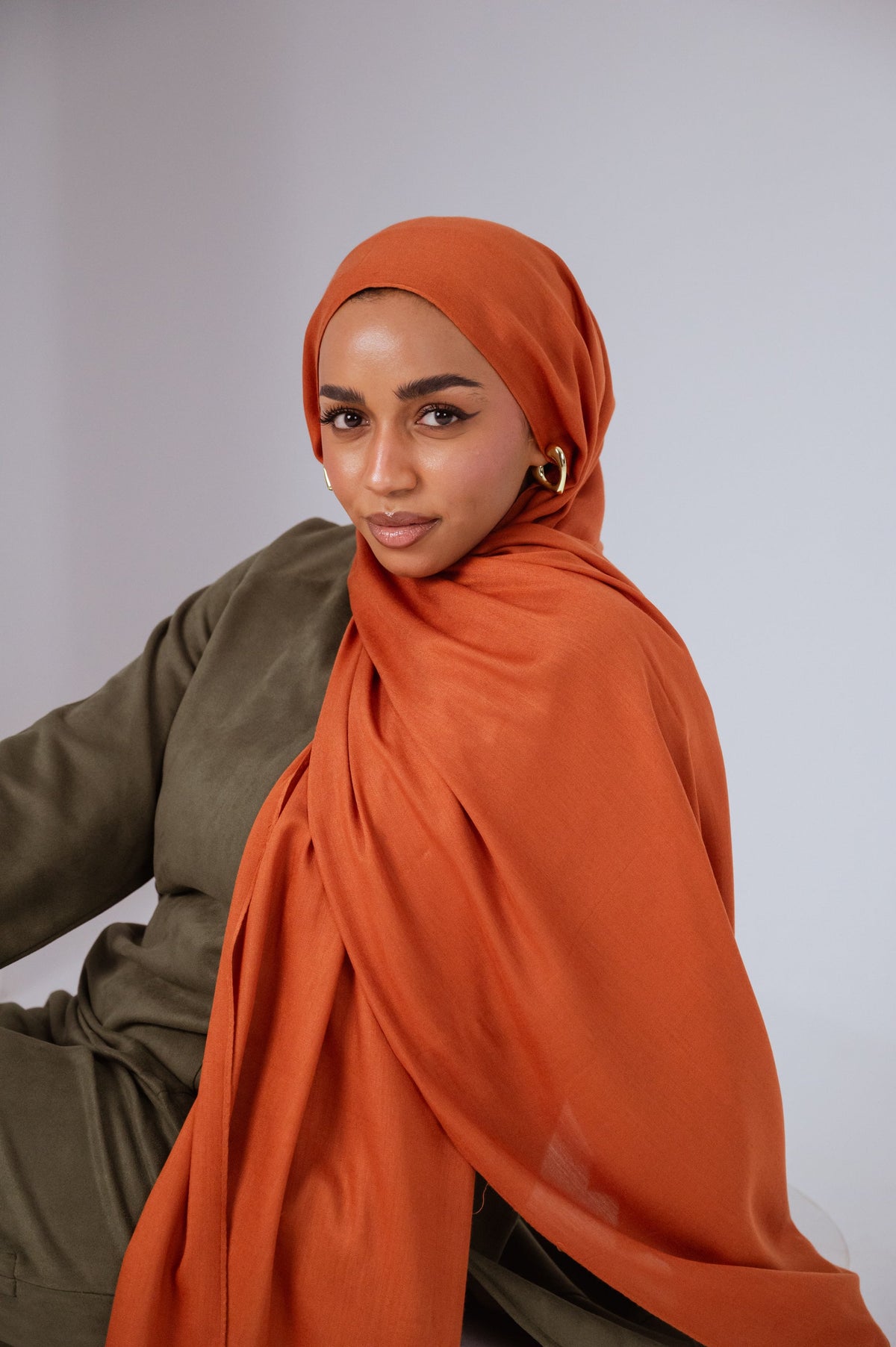
How to Style a Modal Hijab: 7 Easy Everyday Looks
Modal hijabs are easiest to style when you let the fabric’s soft grip and fluid drape do most of the work. Start with even framing around the face, keep one side slightly longer when you want to wrap, and add an underscarf or magnet only when you want extra security. Below are seven easy modal hijab styles for everyday wear, work and polished outfits.
A soft base for these everyday wraps

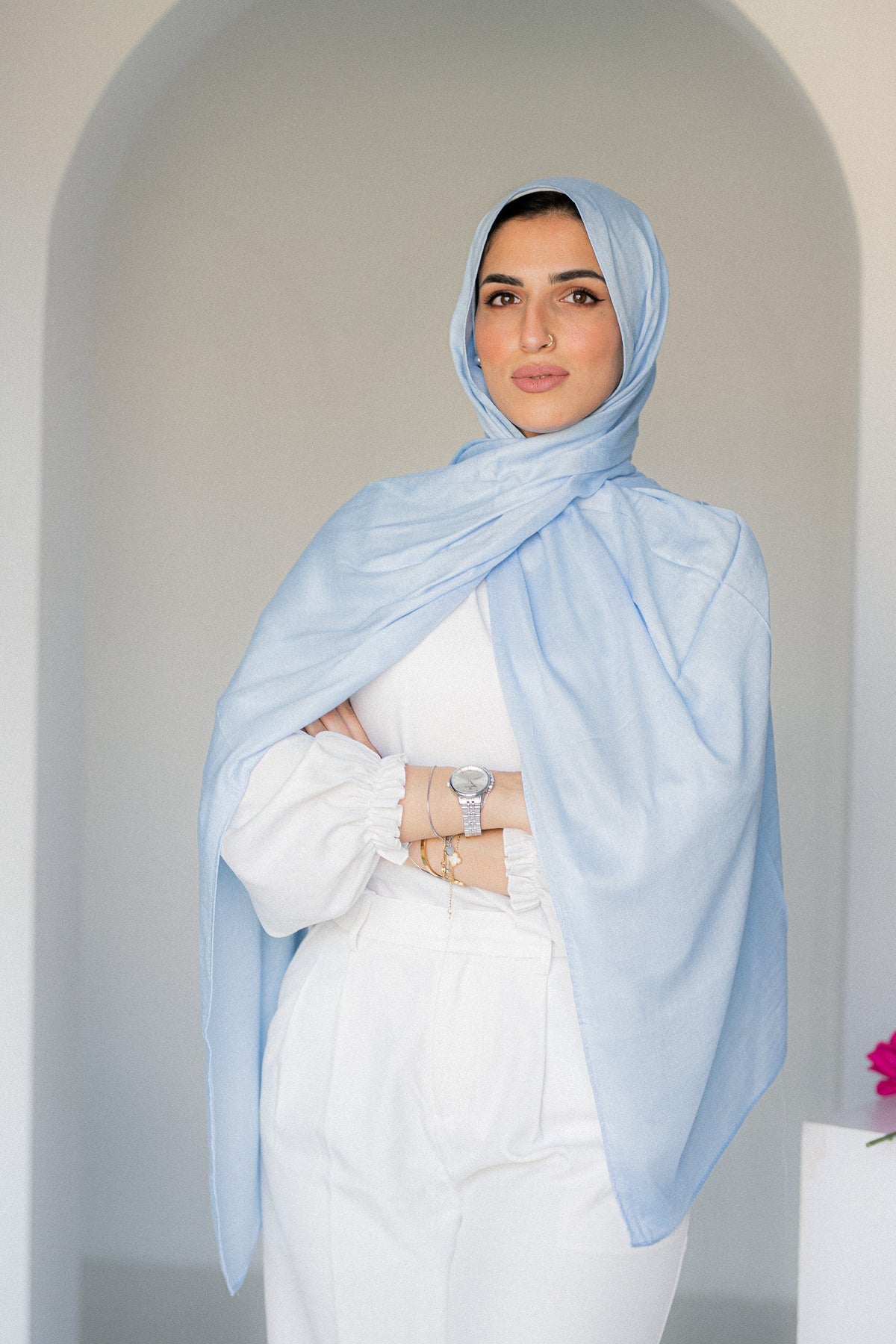
Morning Sky – Modal Cotton Hijab
A powder blue modal cotton option for soft, relaxed draping.
View product →If you are still deciding whether modal is the right fabric for you, start with our modal hijab fabric guide or compare it directly with chiffon in our chiffon vs modal hijab guide.
Why Modal Hijabs Are So Easy to Style
Modal hijabs are popular for everyday styling because the fabric feels soft, drapes naturally and usually needs less structure than a crisp scarf. JAIDA’s modal cotton hijabs have a soft-grip texture that helps simple folds sit where you place them, which makes relaxed and pin-light styles especially practical.
1. Frame First
Set the fabric around your face before wrapping the rest. A clean frame makes even a very simple style look intentional.
2. Keep Tension Gentle
Pull only enough to guide the fabric. Too much tension can flatten the drape and make the scarf less comfortable.
3. Add Security Only if Needed
An undercap, magnet or clip can help on long days, but many modal styles can stay simple with minimal hardware.
7 Easy Ways to Style a Modal Hijab
1. The Classic Front Drape
Best for: everyday outfits, errands, university and casual workdays.
Place the hijab with both sides close to equal length. Frame the face, bring each side forward over the shoulders and let the fabric fall naturally. You can lightly cross the ends at the chest or leave them loose for a softer look.
Why it works with modal: the fabric’s natural drape creates shape without needing many folds. If you want extra hold around the face, pair it with a lightweight Inner Silk Under-scarf.
2. The One-Side-Long Everyday Wrap
Best for: all-day wear when you want a little more security.
Start with one side noticeably longer than the other. Frame the face, then bring the longer side under the chin and around the opposite shoulder. Let the remaining length fall naturally rather than pulling it tight.
This is one of the easiest ways to get a secure-looking finish while keeping the style relaxed. A hijab magnet under the chin can add security without piercing the fabric.
3. The Relaxed Shoulder Drape
Best for: oversized blazers, knitwear, long coats and casual layered outfits.
Keep one side slightly longer, frame the face and sweep the longer end loosely across the front of the neck onto the opposite shoulder. Avoid wrapping it tightly. The goal is an easy, soft line that complements relaxed clothing.
If you are building outfits around colour rather than technique, our hijab colour-matching guide gives seven simple formulas you can reuse.
4. The Clean Tucked Work Style
Best for: office outfits, uniforms, blazers and days when loose ends get in the way.
Start with one side slightly longer. Secure the frame comfortably, bring both ends forward and tuck them neatly into the neckline of your top, blazer or cardigan. Keep the front layer smooth rather than over-folding the fabric.
For a more fixed finish, use a small magnet or a Turkish Hijab Clip in a position that does not create uncomfortable tension.
5. The Pin-Free Casual Wrap
Best for: short outings and anyone who prefers the least amount of hardware.
Place the scarf with one side longer, frame your face, then wrap the longer end once around the neck and let it fall back over the shoulder. Because modal has more natural grip than very slick fabrics, this simple wrap can work without pins for many wearers.
Your hair texture, undercap, coat collar and activity level can all affect how secure a pin-free style feels. If you are new to styling, our beginner hijab styling guide is a useful starting point.
6. The Layered Front Drape for More Coverage
Best for: outfits where you want more fabric across the chest without adding a bulky wrap.
Begin with one side longer. After framing the face, bring the longer side diagonally across the front rather than straight around the neck. Let the fabric spread naturally across the chest, then place the end over the opposite shoulder.
The key is to spread the modal rather than bunch it. A larger, fluid surface gives more visual coverage while keeping the look soft.
7. The Polished Occasion Wrap
Best for: dinners, events and dressier outfits when you still want the softness of modal.
Make the face frame slightly cleaner and more defined than you would for a casual style. Keep one side longer, wrap it smoothly around the neck and arrange the final end over one shoulder. Use a magnet or decorative clip if you want the layers to stay in a precise position.
For a more formal effect, keep the outfit simple and let the hijab colour do the work. A rich rust, soft blue or warm neutral can create a polished look without needing complicated styling.
Three Modal Hijabs to Build Your Styling Rotation Around
For the easiest everyday wardrobe, choose colours that can work across several outfits and occasions. These currently in-stock JAIDA modal cotton hijabs are especially versatile:


Shop all JAIDA Modal Cotton Hijabs →
Do You Need an Undercap With a Modal Hijab?
Not always. Many people like modal specifically because its texture can feel easier to keep in place than very smooth fabrics. An undercap becomes more useful when you want a fixed face frame, extra hair coverage, more friction for a long day, or a base for a layered style.
If you are unsure which option suits you, read our underscarf guide. You can also compare magnets, clips and other styling tools in our hijab accessories guide.
Modal Hijab Styling Mistakes to Avoid
- Pulling too tightly: modal looks best when its natural drape is allowed to fall rather than being stretched flat.
- Using too many folds around the face: extra layers can create unnecessary bulk. Start simple and add structure only where you need it.
- Ignoring the neckline: collars, coat lapels and high-neck tops can push the scarf upward. Check the full outfit before deciding how much fabric to tuck or leave loose.
- Choosing security tools out of habit: use magnets, clips or an undercap when they solve a specific styling problem rather than automatically adding all of them.
- Overcomplicating colour: a simple drape often looks most polished when the hijab colour clearly complements the outfit.
Which Modal Hijab Style Should You Choose?
For Everyday Wear
Choose the classic front drape, relaxed shoulder drape or pin-free casual wrap.
For Work
Choose the clean tucked style or one-side-long wrap for a neat finish with fewer loose ends.
For More Coverage
Choose the layered front drape and spread the fabric rather than bunching it around the neck.
For Dressier Outfits
Choose the polished occasion wrap and secure only the layers you want to stay precisely in place.
Frequently Asked Questions
Can you wear a modal hijab without pins?
Yes. Many simple modal styles can be worn without traditional pins because the fabric has more natural grip than very slick materials. Whether a pin-free style feels secure depends on your wrapping technique, hair, undercap, activity level and clothing.
Do modal hijabs need an underscarf?
No. An underscarf is optional. It can be helpful when you want extra grip, a more fixed face frame or additional security for long wear, but it is not required for every modal style.
How do you stop a modal hijab from slipping?
Start with a stable face frame, avoid pulling the scarf too tightly, and make sure the fabric is not being pushed around by a high collar or slippery base. If you still want more hold, add an undercap, magnet or clip where it actually helps.
Is modal easier to style than chiffon?
For relaxed everyday looks, many wearers find modal simpler because it is soft and naturally grippy. Chiffon gives a lighter, more polished drape and can be excellent for work or occasions. The better choice depends on the look you want. Our chiffon vs modal comparison breaks down the differences.
Which modal hijab style gives more coverage?
The layered front drape usually gives the most front coverage because the longer side is spread diagonally across the chest instead of being wrapped tightly around the neck. Using a generously sized scarf also gives you more fabric to work with.
Final Takeaway
The easiest modal hijab styles are usually the simplest ones. Build a clean face frame, use gentle tension, let the fabric drape naturally and add an undercap, magnet or clip only when you need extra hold. Once you have one reliable everyday wrap, small changes in length, shoulder placement and colour can create several different looks without learning a complicated technique.

Hinterlasse einen Kommentar
Diese Website ist durch hCaptcha geschützt und es gelten die allgemeinen Geschäftsbedingungen und Datenschutzbestimmungen von hCaptcha.