


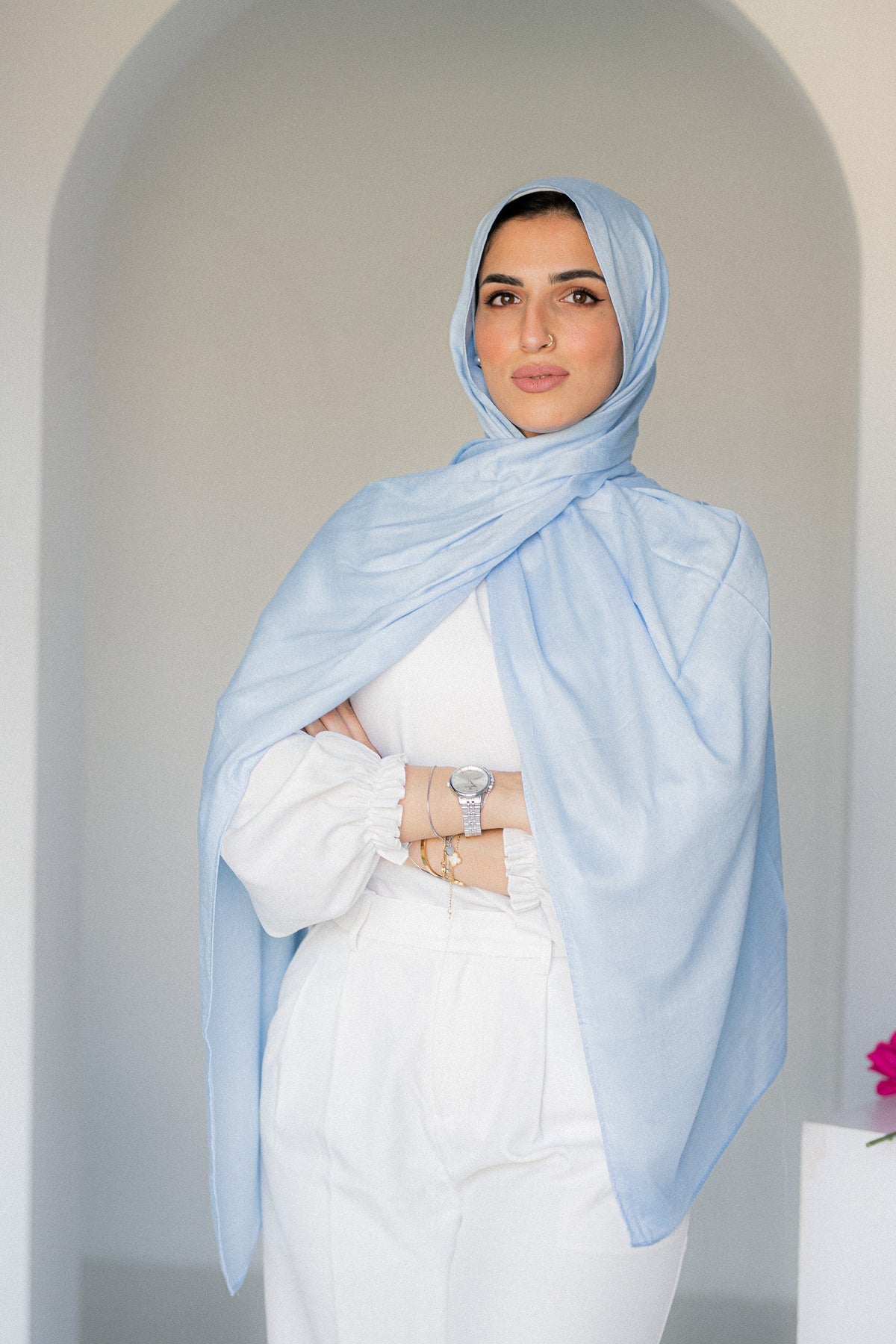
Best Hijabs for Windy & Rainy Weather in Canada: Fabrics, Grip & Styling
The best hijab for windy or rainy weather is not simply the heaviest scarf. For everyday windy days, a naturally grippy fabric such as modal cotton is usually easier to keep in place. For a polished chiffon look, add a secure base or clip. If you expect to get genuinely wet, a dedicated quick-dry sport hijab is far more practical than treating an everyday fashion hijab like rainwear.
Start with the scarf and secure the layers

Night Dunes – Luxury Chiffon Hijab
A flowing chiffon option for the draped styles in this guide.
View product →
Jaida – Luxury Hijab Magnet Set
A pin-free fastening option to try with your preferred scarf arrangement.
View product →This guide explains what actually helps in Canadian wind and rain, which fabrics make sense, and how to secure your hijab without wrapping it uncomfortably tight.
Quick recommendation
Windy everyday weather: modal cotton + a secure, simple wrap.
Windy polished look: chiffon + underscarf, magnet or clip as needed.
Rain, swimming or repeated wet conditions: choose a purpose-built quick-dry sport hijab.
What Makes a Hijab Stay Put in Wind?
Wind resistance comes from a combination of fabric grip, styling, base security and how much loose fabric is exposed. A heavier scarf can still move if the fabric is slippery or the wrap has long unsecured tails.
For windy days, focus on four things:
- Grip: fabric that holds against itself requires less adjustment.
- A stable base: an underscarf can reduce shifting around the hairline.
- A secure point: one well-placed clip or magnet can be more useful than tightening the entire wrap.
- Less loose fabric: keep long ends controlled when the forecast is gusty.
If slipping is your main problem even on calm days, start with Why Does My Hijab Keep Slipping? How to Make It Stay.
Best Everyday Fabric for Wind: Modal Cotton
Modal cotton is one of the easiest options for everyday windy weather because its softer texture creates natural grip. That means you can use a relaxed style without relying on excessive tension around the head.
It is especially practical for commuting, school runs, workdays and errands where you may move repeatedly between outdoors and heated indoor spaces.

For a broader comparison of grip across materials, read What Hijab Material Stays in Place? The Honest Ranking.
Can You Wear Chiffon on a Windy Day?
Yes. Chiffon is not automatically a bad choice for wind. The main difference is that its lighter, smoother drape can benefit from a more secure base than modal.
If you prefer chiffon for work, dinners or polished outfits, use one or two simple security points rather than adding more layers than you need. An underscarf can stabilize the front edge, while magnets or a snag-free clip can secure the wrap under the chin or at the shoulder.
Do not solve wind by pulling the scarf excessively tight. A secure wrap should still feel comfortable after several hours.
The Most Useful Windy-Day Upgrade: A Secure Underscarf
An underscarf can create a more stable foundation when the outer scarf is lightweight or when your hair texture makes the hijab shift more easily.

If you are not sure which base is right for you, see Underscarves Explained: How to Choose the Right Undercap.
Magnets or Clips for Wind?
Both can work; the better choice depends on where you need the hold.
Hijab Magnets
Best for a discreet secure point
Useful under the chin or where you want the fabric held without a traditional pin hole.
Hijab Clips
Best for a visible, mechanical hold
Useful when you want a small clip to hold layers together, especially on delicate chiffon or satin.
For a full comparison, read Hijab Magnets vs Pins: What’s Better for Chiffon & Satin?.

What Is the Best Hijab for Rain?
There is an important distinction between being caught in light rain and expecting the hijab itself to function as wet-weather or water-activity gear.
Everyday modal, chiffon and satin hijabs are fashion fabrics. They are not the products we would choose specifically because you expect them to become soaked. If an everyday scarf gets damp, let it dry fully and follow its normal care instructions.
If you are going to be repeatedly exposed to water—or you want a fabric specifically designed for wet conditions—a dedicated sport or swim hijab is the more practical choice.

For activity-specific advice, continue with our Swim & Sport Hijab Guide: How to Choose One.
5 Ways to Secure Your Hijab Before Going Outside
- Keep the front edge anchored. If that area shifts, the entire style often follows.
- Use one secure point under the chin. A magnet or clip can reduce movement without overtightening.
- Tuck or control long tails. Loose ends catch wind more easily.
- Use an underscarf when you need extra grip. It is especially useful with smoother outer fabrics.
- Test the style before leaving. Move your head, bend and put on your coat to make sure the scarf stays comfortable.
What Should You Wear Under a Hood?
If your coat has a hood, avoid building too much volume at the back of the head. A simpler wrap usually fits more comfortably and is less likely to bunch when you pull the hood up.
Modal works especially well for this because it can be styled close to the head without requiring a stiff structure. Chiffon also works if the loose fabric is kept controlled.
Windy Commute vs Heavy Rain: Choose Differently
Modal + simple secure wrap
Chiffon + secure base or accessory
Protect your everyday scarf where practical; dry it fully afterward
Purpose-built quick-dry sport hijab
How This Changes Through Canadian Fall and Winter
Wind and rain often arrive alongside changing temperatures, but you do not necessarily need a heavier hijab every time the weather cools.
For fall, focus on grip and layering. For winter, you also need to think about coat collars, hats or hoods and avoiding unnecessary bulk around the neck.
Read Best Hijabs for Fall in Canada: Fabrics, Colours & Layering and Hijab in Winter: Staying Warm Without the Bulk for the seasonal details.
Shop Weather-Ready Styling Essentials
Everyday grip
Modal Cotton Hijabs
Soft-grip options for commuting and everyday windy weather.
Shop Modal Cotton →Stable base
Under-scarves
Add grip and structure when your outer scarf needs more support.
Shop Under-scarves →Extra security
Magnets & Accessories
Secure key points without making the entire wrap tighter.
Shop Accessories →Frequently Asked Questions
What hijab material is best for windy weather?
Modal cotton is one of the easiest everyday choices because its soft texture creates natural grip. Chiffon can also work well when paired with a secure base, magnet or clip.
Is modal hijab good in the wind?
Yes. Modal's natural grip makes it practical for windy everyday conditions, particularly when you keep loose ends controlled and use a simple wrap.
Is chiffon too slippery for windy weather?
Not necessarily. Chiffon is lighter and can need more support than modal, but an underscarf, magnet or clip can make a chiffon style much more secure.
Should I wear an underscarf when it is windy?
You do not always need one, but an underscarf can help stabilize the front edge and reduce shifting if your outer scarf is smooth or your usual style moves easily.
What hijab is best for rain?
For ordinary daily wear, fashion hijabs are fine if you are simply moving through light weather and keeping them protected where practical. If you expect repeated water exposure or want a scarf specifically designed to get wet, choose a purpose-built quick-dry sport or swim hijab.
Should I wrap my hijab tighter on a windy day?
No. Security should come from grip, a stable base and a well-placed accessory rather than uncomfortable tension around your head and neck.
The Bottom Line
Windy and rainy weather does not require a completely different hijab wardrobe. For wind, prioritize grip and secure styling. For genuinely wet conditions, switch to a product designed for water rather than expecting an everyday fashion scarf to do the same job.

Laisser un commentaire
Ce site est protégé par hCaptcha, et la Politique de confidentialité et les Conditions de service de hCaptcha s’appliquent.