


So verhinderst du Kopfschmerzen durch den Hijab
A hijab gives you a headache when something presses on your head, not because of the hijab itself. The usual causes are a tight undercap with a binding edge, a heavy or high bun pulling on your scalp, an over-tight wrap, or too many heavy layers. Loosen each of those, switch to a seamless undercap and a lighter fabric, and the headaches almost always stop.
A hijab should never hurt. If yours leaves you with a tension headache by the afternoon, that is a signal that something is too tight, and it is very fixable. This guide walks through each cause of a hijab headache and exactly how to relieve it, so you can wear yours all day in comfort.
Why does my hijab give me a headache?
Nearly every hijab headache is a pressure headache. Steady, low-level tension somewhere on your head builds slowly until it aches, the same way a tight ponytail or a too-small hat does. There are four usual sources, and naming yours is the first step to fixing it.
- A tight undercap. A cap with a firm elastic or seamed band presses a line around your head all day. This is the single most common cause.
- A heavy or high bun. A tight bun, especially high on the head, pulls constantly on your roots and scalp.
- Wrapping too tightly. Pulling the hijab snug for security can tip into squeezing, which presses on the temples and forehead.
- Heavy or layered fabric. A weighty hijab, or too many layers, adds load that strains the head and neck over time.
The reassuring part: not one of these is the hijab itself. Each is an adjustable choice, and each has a simple fix below.
How do I fix a hijab headache?
Work through these in order. For most people, the first one alone solves it.
- Switch to a seamless, non-binding undercap. If your cap has a tight band, this is almost certainly your culprit. A soft, seamless undercap holds your hair and grips your hijab without pressing a hard edge into your head.
- Lower and loosen your bun. Move it down to the nape and keep it loose. Your hair stays tidy, but the constant pull on your scalp disappears.
- Wrap snug, not tight. Secure firmly enough that the hijab stays put, then stop. One magnet under the chin holds everything without you having to cinch it.
- Lighten the fabric and the layers. Choose a lightweight, breathable hijab and keep the styling simple, so there is less weight to carry through the day.
Make these changes and a hijab headache usually eases within a day or two, because you have removed the steady pressure causing it.

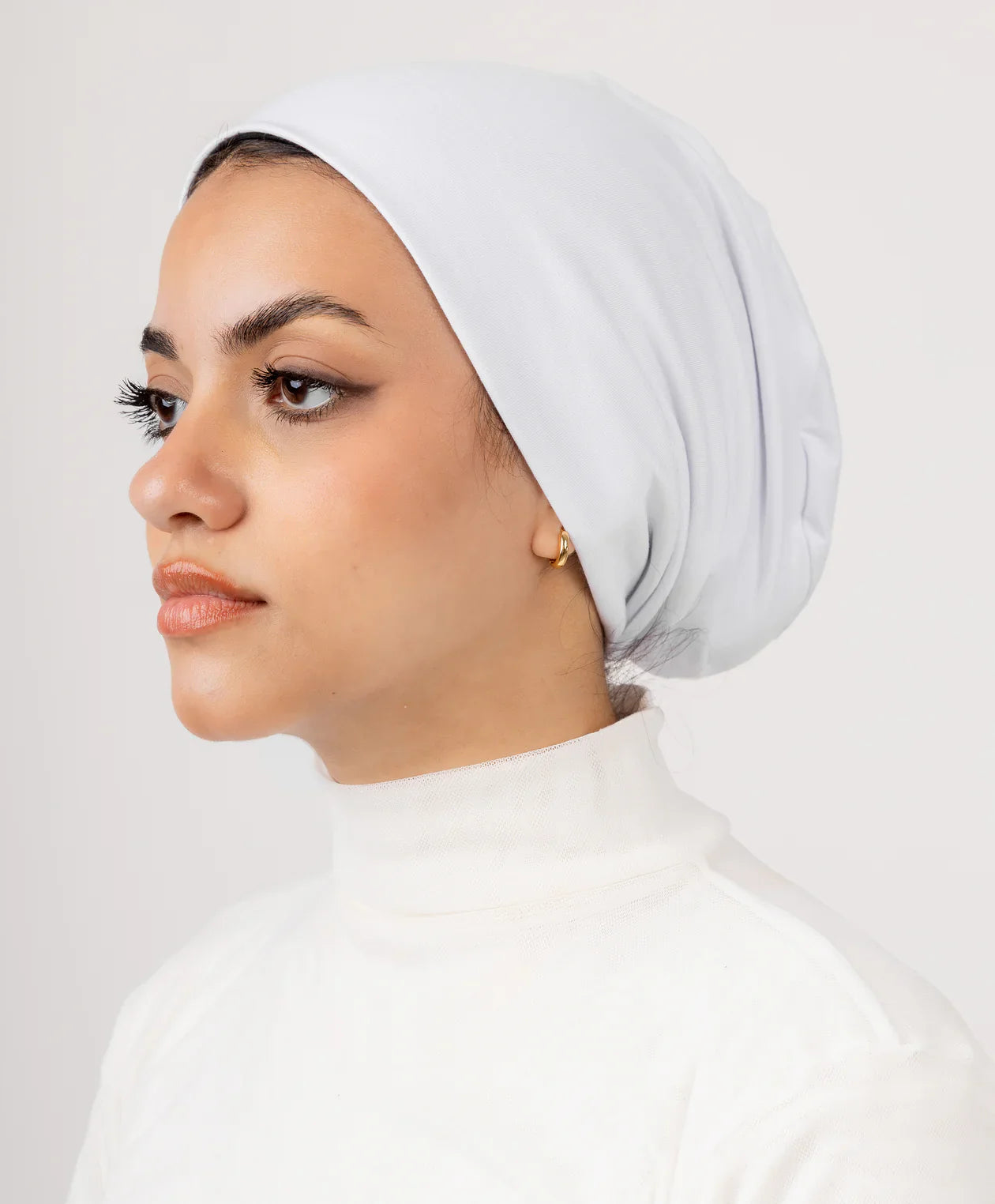
No band, no pressure line
No Thread Undercap
Seamless and smooth with no tight elastic edge to press into your head, so it holds your hijab securely without the binding line that causes so many tension headaches. Comfort you stop noticing.
Shop the No Thread Undercap →Can a tight undercap really cause headaches?
Yes, and it is the most overlooked cause. Many undercaps have a firm elastic or a seamed edge that sits in the same place around your head all day. That constant, narrow band of pressure is a classic trigger for a tension headache, the same mechanism behind the ache from tight goggles or a too-snug headband.
The fix is a seamless undercap with no binding edge. It still does everything an undercap should, containing your hair and giving your hijab grip, but without the pressure line. If you are choosing one, look specifically for a smooth, seam-free design rather than a tight elasticated band. Our full guide to choosing an undercap covers the different styles and which suits you.
Lighter habits that help
Beyond the cap, a few gentle habits keep tension from building.
Choose a lightweight fabric. A heavy hijab worn all day adds up, and a light, breathable one like modal cotton or chiffon carries almost no weight while still draping beautifully. Keep your styling simple, too, since fewer layers and fewer pins mean less to press on your head. And give yourself breaks where you can, loosening or removing everything when you are at home so your scalp gets a rest.

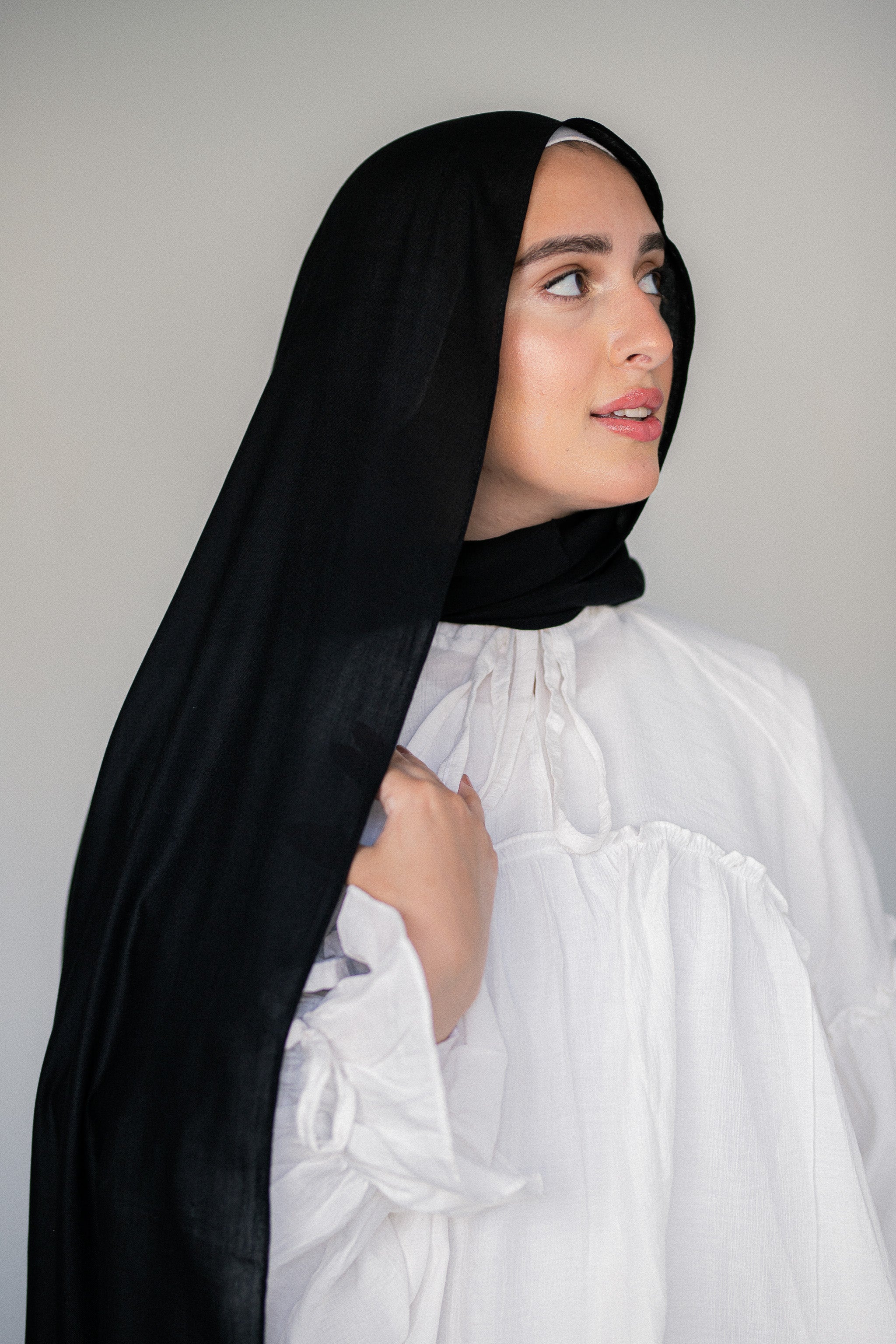
Light enough to forget
Afire Modal Cotton
A soft, lightweight modal cotton that drapes without weight and grips without needing a tight wrap. Less load on your head means less of the tension that turns into a headache.
Shop Afire →Is my hijab too tight if it slips and I keep tightening it?
This is a common trap. When a hijab slips, the instinct is to wrap it tighter, which trades a slipping problem for a headache. The real fix is grip, not tightness: a non-slip undercap and a secure point under the chin keep the hijab in place without you cinching it down. If you find yourself constantly retightening, our guide to why your hijab keeps slipping solves the cause, so you can wear it comfortably loose.
When should I see a doctor?
This matters. The advice here resolves the everyday pressure headaches that come from how a hijab is worn. But if your headaches are severe, frequent, or continue even after you have loosened the cap, the bun, and the wrap, they may have nothing to do with your hijab, and you should see a doctor. Headaches have many causes, and a persistent one deserves a proper look from a professional rather than another adjustment to your scarf.
The bottom line
A hijab should feel like nothing at all, and when it gives you a headache, pressure is almost always the reason. Switch to a seamless, non-binding undercap, wear your bun low and loose, wrap snug rather than tight, and keep your fabric light. Those four changes relieve most hijab headaches quickly. And if the pain persists despite all of it, see a doctor, because your comfort is worth a real answer.
Every JAIDA piece ships same-day from our studio in Ontario, with free shipping over $99 CAD in Canada and over $75 USD to the United States, and free 30-day returns.
Shop the seamless No Thread undercap →
Shop lightweight modal cotton hijabs →
Still getting headaches and not sure why? Send us a message on @myjaida and we will help you find a more comfortable setup. 🤍
Frequently asked questions
Why does my hijab give me a headache?
A hijab headache is almost always caused by pressure, not the hijab itself. The usual culprits are a tight undercap with a binding edge, a heavy or high bun pulling on the scalp, wrapping the hijab too tightly, or too many heavy layers. Each adds steady tension that builds into a headache over the day, and each is easy to fix.
How do I stop my hijab from giving me a headache?
Loosen everything that presses on your head: wear a seamless, non-binding undercap, move your bun low and loose, wrap the hijab snug but not tight, and choose lighter fabrics. Removing the steady pressure these create resolves most hijab headaches within a day or two.
Can a tight undercap cause headaches?
Yes. A tight undercap, especially one with a firm elastic or seamed band, presses a line around your head all day, which is a common cause of tension headaches. A seamless undercap with no binding edge removes that pressure point while still holding your hijab securely.
Does wearing my hair in a bun under my hijab cause headaches?
It can. A heavy or high, tight bun pulls steadily on the scalp and roots, which builds into a headache over a long day, much like a tight ponytail does. Wearing your hair in a lower, looser bun or braid relieves the tension while still keeping it neatly out of the way.
What kind of undercap is best to avoid headaches?
A soft, seamless undercap with no tight elastic or seamed edge is best, because it holds your hair and grips your hijab without pressing a line into your head. Avoid stiff or tight bands, and make sure the cap sits comfortably snug rather than gripping.
Why do I get a headache only when I wear my hijab?
If headaches appear only on the days you wear hijab, the cause is almost certainly mechanical pressure: a tight cap, a pulling bun, or an over-tight wrap. Adjusting those usually resolves it. If headaches continue after loosening everything, it is worth seeing a doctor, since the cause may be unrelated to the hijab.
Can heavy hijab fabric cause head and neck pain?
Heavy or many-layered hijabs add weight that can contribute to head and neck strain over a long day. Choosing a lighter, breathable fabric like modal cotton or chiffon and keeping the styling simple reduces the load and the tension that comes with it.

Hinterlasse einen Kommentar
Diese Website ist durch hCaptcha geschützt und es gelten die allgemeinen Geschäftsbedingungen und Datenschutzbestimmungen von hCaptcha.