


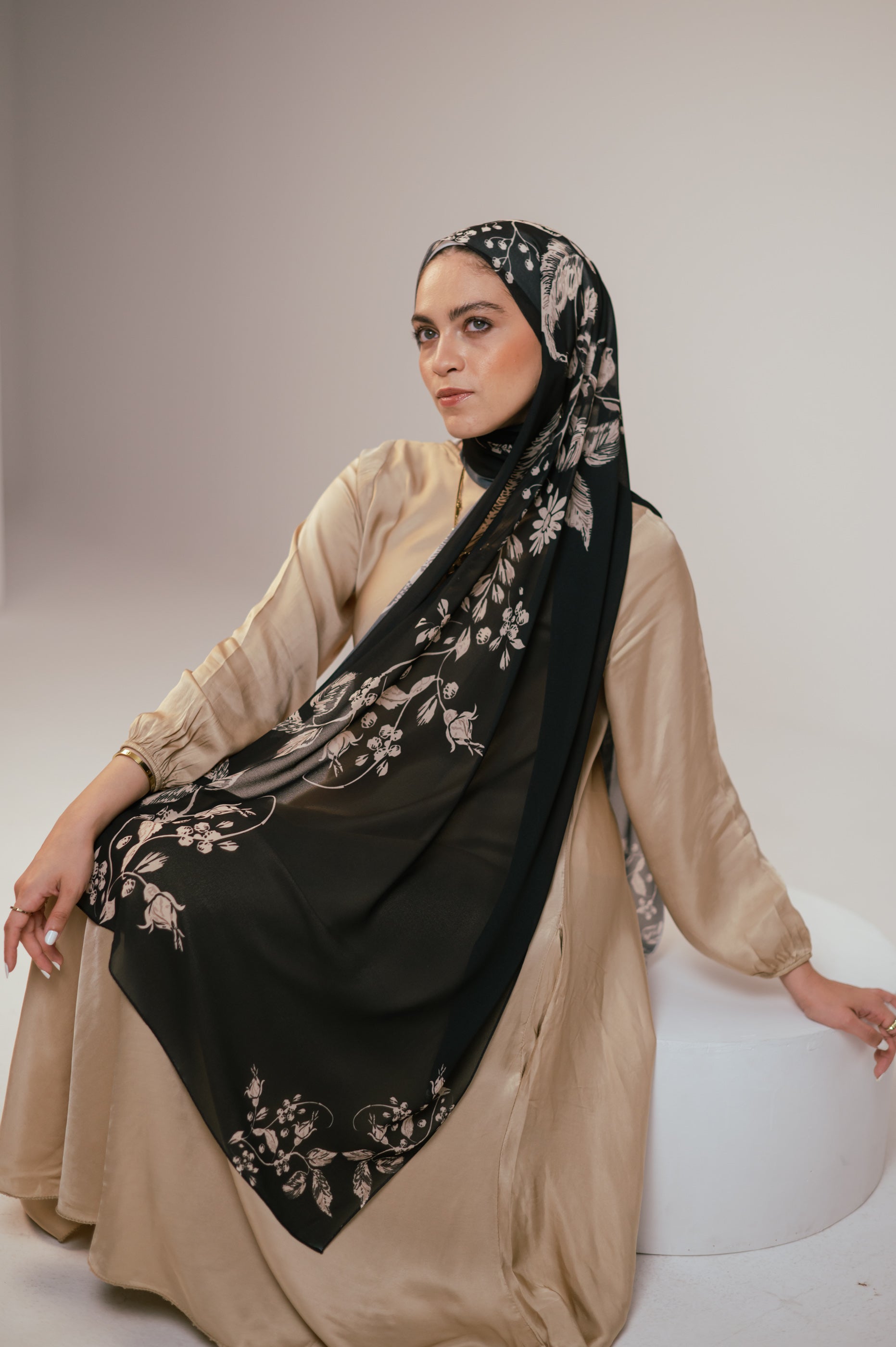
Hijab-Etikette: ehrliche Antworten auf häufige Fragen
Hijab raises a lot of everyday questions, from whether you can sleep or swim in one to how to keep it from slipping and what is polite to ask. This guide answers the most common ones honestly and simply. Practical questions get a clear practical answer; questions that are genuinely religious are best taken to a knowledgeable teacher, and we will say so where that applies.
Whether you are a new hijabi, someone curious and respectful, or a long-time wearer looking for a quick reference, here are honest answers to the questions people ask most.
Everyday wear
Can you sleep in a hijab?
You can, but it is better for your hair and comfort to take it off at home, where hijab is not required around family. If you do sleep covered, such as when travelling or sharing space, choose a loose, soft jersey or modal cap rather than a tight wrap or pins, so nothing pulls on your hair overnight.
Can you shower or swim in a hijab?
You do not wear a hijab in a private shower. For swimming in public, a purpose-built swim hijab in waterproof, quick-dry fabric is the practical choice, since an everyday cotton or chiffon scarf soaks up water and turns heavy. Keep a regular hijab for dry land and a swim hijab for the water.
Do you wear a hijab at home?
Generally, hijab is not required at home among close family members who are mahram. It is typically worn in public and around those outside that circle. The specifics of who one covers in front of are a religious matter, and a knowledgeable teacher can explain them clearly.
Hair and care
Can you dye or style your hair if you wear a hijab?
Yes. Wearing a hijab has nothing to do with how you cut, colour, or style the hair underneath, and many hijabis enjoy their hair fully. Just let any wet treatment dry completely before covering, and use a smooth, silk-touch undercap to protect your hair and hairline from friction during the day.
Does wearing a hijab damage your hair?
Not on its own. Hair concerns linked to hijab come from friction, tension, and trapped moisture, all preventable with a smooth undercap, loose styling, and covering only dry hair. We cover this in full in our guide to whether hijabs damage your hair.
Can you wear makeup with a hijab?
Yes, many hijabis do. Practically, a well-fitted undercap keeps your hijab off your face so makeup stays put, and a matte fabric like modal cotton is less likely to transfer. How much makeup suits which setting is a personal, sometimes religious question that individuals decide for themselves.

The answer to half these questions
Inner Silk Undercap
Keeps your hair contained, your hijab from slipping, your makeup off the fabric, and your hairline protected from friction. Silk-touch inside, grippy cotton outside.
Shop the Inner Silk Undercap →Styling and coverage
Do you have to wear an undercap with a hijab?
No, it is optional, but most people find it makes hijab far easier. It keeps your hair contained, gives the hijab grip so it does not slip, and protects your hairline. With a naturally grippy fabric like modal cotton you can skip it; for chiffon and satin an undercap helps a lot.
How do you keep a hijab from slipping?
Wear a grippy undercap at your hairline, choose a non-slip fabric like modal cotton, and secure one point under the chin with a magnet or pin. Tying your hair back flat helps too. Our full guide to why your hijab keeps slipping walks through every cause and fix.
Does a hijab have to match your outfit?
No. A hijab can match your outfit, complement it in a related tone, or contrast as a feature. Neutral hijabs in black, ivory, beige, and grey go with almost everything, which is why they are staples. Matching exactly is a style choice, not a rule.
Can you wear a hijab with bangs or your hair showing?
The purpose of hijab is to cover the hair, so for those who observe it fully, bangs and hair are tucked away under an undercap rather than left showing. Styling choices vary between individuals and communities, and questions about how much must be covered are best discussed with a knowledgeable teacher.

When you want something special
Petal Shadows Chiffon
A versatile luxury chiffon that dresses up an outfit and drapes beautifully. Opaque when layered over a matching undercap. Same-day shipping from Ontario.
Shop Petal Shadows →Social and etiquette
Is it rude to ask someone about their hijab?
A respectful, genuine question asked kindly is usually welcome, as most hijabis are happy to share. What feels uncomfortable is touching someone's hijab, demanding they remove it, or treating it as strange. Lead with curiosity and respect and the conversation is almost always a positive one.
Can a non-Muslim wear a hijab?
Yes, in respectful contexts. Non-Muslim women often cover their heads when visiting a mosque or attending a religious occasion, and it is seen as a sign of respect. Wearing a headscarf for warmth, fashion, or modesty is also common across many cultures.
Should I take my shoes off or cover my head when visiting a mosque?
Yes to both, generally. Visitors remove their shoes before entering the prayer area, and women are usually asked to cover their hair with a scarf. Dressing modestly with covered arms and legs is expected of everyone. When in doubt, bring a scarf and follow what others are doing.
Questions about faith
Some of the most-asked questions, such as exactly when hijab becomes obligatory, precisely who one must cover in front of, and similar matters, are religious rulings rather than styling or etiquette. We are a hijab brand, not a religious authority, so rather than give you a half-answer, we will point you to the right source.
At what age do girls start wearing hijab?
This varies by family, culture, and interpretation, and is commonly associated with approaching puberty, though many girls choose to start earlier or later. It is a personal and religious decision best guided by family and a knowledgeable teacher rather than a fixed rule.
Who decides when and how a woman wears hijab?
Ultimately the woman herself, in line with her own faith and understanding. For the religious details behind any of these questions, a trusted local imam, teacher, or scholar is the right person to ask, and the best source for an answer you can rely on.
Still have a question?
If your question is about the practical side, choosing a fabric, keeping a hijab secure, caring for it, or finding the right piece, that is exactly what we are here for. For the meanings of the terms used across these answers, our hijab glossary explains the fabrics, styles, and words in plain language.
Every JAIDA piece ships same-day from our studio in Ontario, with free shipping over $99 CAD in Canada and over $75 USD to the United States, and free 30-day returns.
Shop all JAIDA hijabs and essentials →
Have a question we did not answer here? Send us a message on @myjaida and we will help. 🤍

Hinterlasse einen Kommentar
Diese Website ist durch hCaptcha geschützt und es gelten die allgemeinen Geschäftsbedingungen und Datenschutzbestimmungen von hCaptcha.