


Schädigt ein Hijab die Haare? Mythos und Wahrheit
No, wearing a hijab does not damage your hair or cause hair loss on its own. The hair concerns sometimes linked to hijab wearing come from three preventable things: friction from rough fabric, tension from tight ties, and moisture trapped by covering damp hair. Remove those, and your hair stays just as healthy under a hijab as it would uncovered.
That is the honest answer, and it matters, because the worry is real and widely shared. The covering itself is not the problem; a few habits around it can be, and every one of them is easy to fix. This guide separates the myth from what is actually true, explains the three real causes, and gives you the simple routine that keeps your hair and hairline healthy.
Does the hijab itself cause hair loss?
No. A piece of fabric resting on your head does not make hair fall out. This is the most important myth to put to rest, because the fear can be more stressful than the reality, and stress itself affects hair.
What can affect your hair is not the hijab but how it is worn. Three specific, avoidable factors are behind almost every hijab-related hair concern, and understanding them takes the worry away, because each one is within your control.
The three real causes, and what is actually true
1. Friction. A rough or coarse fabric rubbing against the same spot all day, especially at the delicate hairline, can stress and weaken those fine edge hairs over time. This is the genuine mechanism behind the worry, and it is why the surface that touches your hair matters so much. A smooth, silk-touch layer against your hairline removes this friction almost entirely.
2. Tension. Pulling hair back tightly, day after day, in the same tight bun or ponytail puts steady strain on the roots, particularly around the hairline and temples. This kind of repeated tension, not the hijab, is what can thin edges over time. Looser styling and varying where you place your bun solves it.
3. Trapped moisture. Covering hair while it is still damp traps moisture and heat against the scalp, which can weaken strands and leave the scalp oily or irritated. Drying your hair fully before covering it is the single easiest fix on this list.
Notice the pattern: none of these is the hijab. All three are habits, and all three are reversible.

Kind to your edges
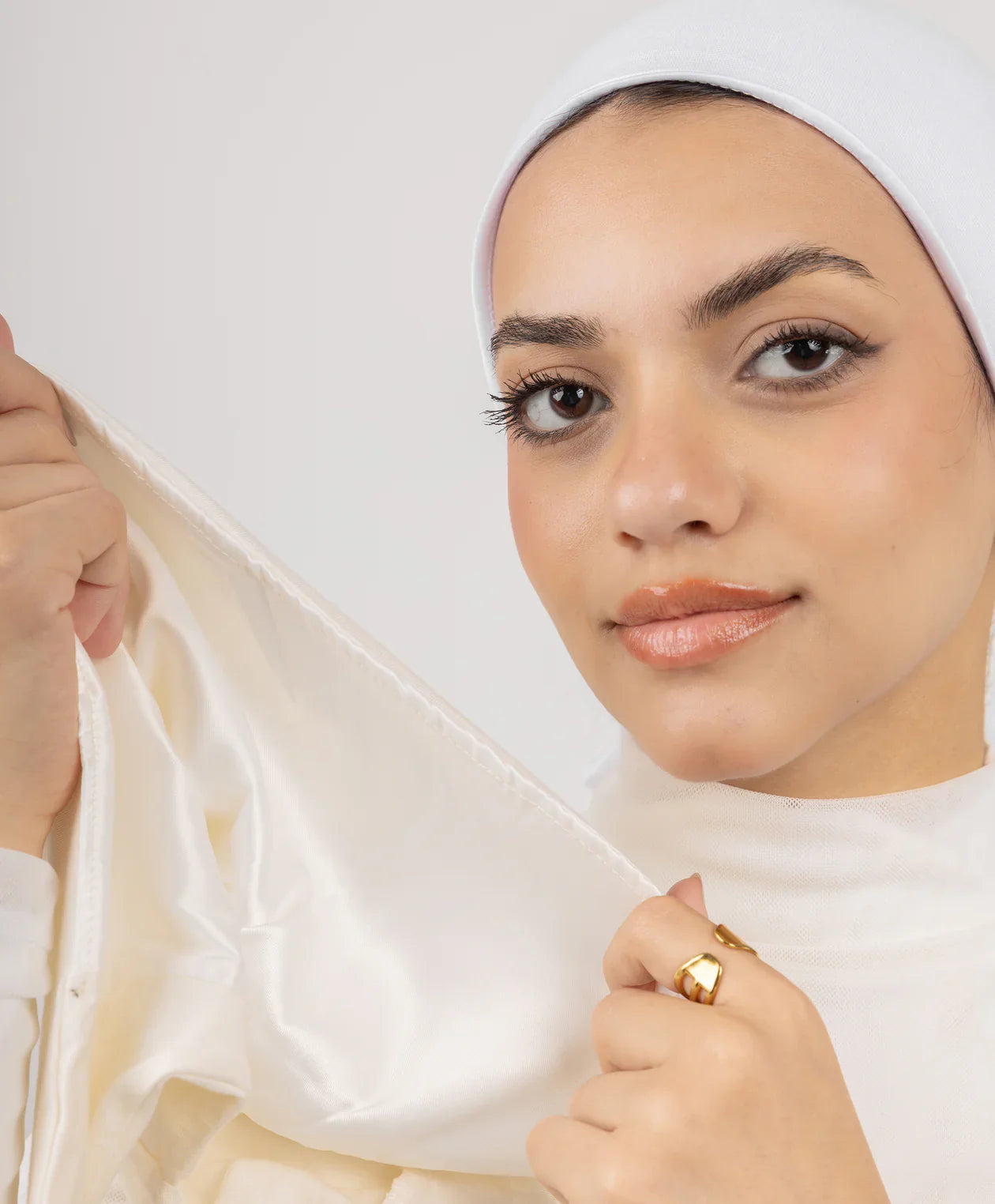
Inner Silk Undercap
The silk-touch interior sits softly against your hairline and reduces the friction that stresses fine edge hairs, while the grippy cotton exterior holds your hijab in place. Protection and grip in one layer.
Shop the Inner Silk Undercap →How does a silk-touch undercap help?
Of the three causes, friction is the one your choice of undercap directly addresses. A smooth, silk-touch surface against your hairline glides rather than rubs, which reduces the daily friction on those delicate edge hairs. It is a meaningful, practical difference, and worth being precise about: a good undercap reduces friction and protects the hairline, it is not a treatment for hair loss, which has many causes a scarf cannot touch.
The design that works best is dual-layer: silk-touch on the inside where it meets your hair, and grippy cotton on the outside where it meets your hijab. You get gentleness against your hairline and a secure, non-slip hold at the same time, instead of choosing between them. If you want the full breakdown of choosing an undercap, our guide to underscarves covers every style.
How do I keep my hair healthy under hijab?
The full routine is short, and it removes all three causes at once.
- Cover only dry hair. Let it dry fully before your undercap goes on. If you are rushed, dry the roots and scalp first.
- Wear a smooth, breathable undercap. Silk-touch against the hairline to cut friction, breathable cotton to let the scalp breathe.
- Tie hair back loosely, and move it around. Avoid the same tight bun in the same spot every day; alternate a low bun, a loose braid, and where you place them.
- Let your scalp breathe at day's end. Take everything down when you are home and let your hair and scalp have some air.
- Keep a gentle wash routine. Wash and condition as your hair type needs, and do not go to bed or cover up with the scalp damp.
For a deeper routine, including washing frequency, scalp care, and protecting length, our complete hair care under hijab guide goes step by step.


In white and black
A Gentle Base, Every Day
Two everyday neutrals so you always have a clean, hair-friendly base layer. Silk-touch inside, grippy cotton outside, kind to your edges from morning to night.
Shop in White → Shop in Black →Does a slipping hijab make it worse?
It can, in a small way. A hijab that constantly slides means you are re-tugging and re-pinning at the hairline all day, which adds friction and tension exactly where your hair is most delicate. A secure setup is gentler on your hair precisely because you stop fiddling with it. If yours drifts, our guide to why your hijab keeps slipping fixes the root cause, and a grippy undercap helps here too.
When should I speak to a professional?
This part matters. If you are noticing persistent shedding, thinning, a receding hairline, bald patches, or scalp irritation that does not improve after you adjust the habits above, please see a doctor or dermatologist. Hair loss has many possible causes, including genetics, hormones, stress, diet, and medical conditions, and most have nothing to do with wearing a hijab. A professional can identify what is actually going on and help properly, which is something no scarf or undercap can do.
The bottom line
Wearing a hijab does not damage your hair. Friction, tension, and trapped moisture can, and all three are simple to avoid: cover only dry hair, wear a smooth silk-touch undercap that reduces friction at the hairline, tie hair back loosely and vary where, and let your scalp breathe. Do that and your hair stays healthy under cover. And if something does not look right despite good habits, see a professional, because your hair deserves a real answer.
Every JAIDA piece ships same-day from our studio in Ontario, with free shipping over $99 CAD in Canada and over $75 USD to the United States, and free 30-day returns.
Shop the Inner Silk Undercap →
Worried about your hair under hijab and not sure where to start? Send us a message on @myjaida and we will help. 🤍
Frequently asked questions
Do hijabs cause hair loss?
Wearing a hijab does not cause hair loss on its own. Hair issues linked to hijab wearing come from preventable habits, not the covering itself: constant friction from rough fabric, tension from tight ties or the same daily bun, and moisture trapped by covering damp hair. Reduce those and your hair stays healthy under hijab.
Does wearing a hijab damage your hairline?
It can if there is constant friction or tension at the hairline, which over time can stress the delicate edges. The fix is to reduce rubbing with a smooth, silk-touch undercap, avoid tight styling that pulls at the edges, and vary where you place your bun or tie so the same spot is not always under tension.
Why does my hair feel damaged or greasy under my hijab?
Usually because hair was covered while damp, or the scalp could not breathe during a long day. Trapped moisture and heat make the scalp oily and weaken strands. Always let hair dry fully before covering it, choose breathable cotton layers, and give your scalp air at the end of the day.
What is the best undercap to protect your hair?
A dual-layer undercap with a smooth, silk-touch interior is gentlest on your hair and hairline, because the soft inner surface reduces the friction that stresses edges, while a grippy cotton exterior holds your hijab in place. Avoid rough or tight caps that rub or pull.
Should I cover my hair when it is wet?
No. Covering damp hair traps moisture against the scalp, which can weaken strands and leave the scalp oily or prone to irritation. Let your hair dry completely before putting on an undercap or hijab, and if you are short on time, focus on drying the roots and scalp first.
How can I keep my hair healthy under hijab?
Cover only dry hair, wear a smooth breathable undercap, avoid tight ties and vary your bun position, let your scalp breathe at the end of the day, and keep up a gentle wash and conditioning routine. These habits remove the friction, tension, and trapped moisture that cause most hijab-related hair concerns.
When should I see a doctor about hair loss?
If you notice persistent shedding, thinning, a receding hairline, bald patches, or scalp irritation that does not improve after adjusting your habits, see a doctor or dermatologist. Hair loss has many causes beyond hijab wearing, including genetics, stress, diet, and medical conditions, and a professional can identify the real cause.

Hinterlasse einen Kommentar
Diese Website ist durch hCaptcha geschützt und es gelten die allgemeinen Geschäftsbedingungen und Datenschutzbestimmungen von hCaptcha.