


Der beste Hijab für Pflegekräfte und medizinisches Personal
Der beste Hijab für Pflegekräfte und medizinisches Fachpersonal ist ein atmungsaktiver, rutschfester Modal-Baumwoll- oder Jersey-Hijab in einer einfarbigen, professionellen Farbe. Er muss während einer langen Schicht sicher sitzen, leicht und oft waschbar sein, vollständig blickdicht sein und bequem unter einer Maske getragen werden können. Chiffon und Satin sind für die Arbeit im Klinikalltag ungeeignet.
Das ist die Kurzfassung. Doch eine 12-Stunden-Schicht im Stehen, zwischen Patientenzimmern und Stethoskop, stellt hohe Anforderungen an einen Hijab. Dieser Leitfaden erklärt Ihnen genau, worauf Sie achten sollten, welches Material eine Schicht übersteht, wie Sie ihn während der Patientenversorgung sicher fixieren und wie Sie ihn im Klinikalltag sauber halten.
Worauf sollte eine Pflegekraft bei der Auswahl eines Hijabs achten?
Klinische Arbeit stellt hohe Anforderungen an einen Hijab. Diese fünf Eigenschaften sind im Klinikalltag entscheidend.
- Atmungsaktiv. Auf Stationen ist es warm, Masken stauen die Wärme, und Sie sind ständig in Bewegung. Ein atmungsaktives Material sorgt dafür, dass Sie auch während einer langen Schicht kühl bleiben und nicht schon nach vier Stunden überhitzen.
- Sicher und rutschfest. Sie können während einer Behandlung nicht anhalten, um den Hijab neu zu positionieren. Sie brauchen ein Material, das auch bei Bücken, Heben und schnellen Bewegungen sicher sitzt.
- Leicht und schnell zu waschen. Ein klinischer Hijab muss häufig gewaschen werden. Wählen Sie ein Material, das sich gut waschen lässt, schnell trocknet und auch nach mehrmaligem Waschen formstabil bleibt.
- Vollständig blickdicht. Im professionellen Umfeld ist vollständige Deckkraft ohne Transparenz erforderlich. Ein mattes, blickdichtes Material oder ein leichteres, über einer Unterhaube getragenes Material sorgt für ein angemessenes Erscheinungsbild.
- Angenehm zu tragen unter Geräten. Maske, Brille, Schlüsselband und Stethoskop liegen um Kopf und Hals. Ein glatter, leichter Stoff sorgt für angenehmen Tragekomfort darunter.
Wenn Sie diese fünf Dinge beachten, müssen Sie sich keine Gedanken mehr um Ihren Hijab machen – genau das, was Sie in einer anstrengenden Schicht brauchen.
Welcher Stoff eignet sich am besten für einen Hijab in einer langen Schicht?
Die Stoffwahl ist entscheidend, und für die Arbeit im Klinikalltag ist die Antwort eindeutig. Elegante Chiffon- und Satinstoffe sind für den Klinikalltag ungeeignet; für eine Schicht benötigen Sie einen praktischen, strapazierfähigen Stoff.
Modal-Baumwolle ist die beste Wahl für den Alltag. Sie ist weich, atmungsaktiv und von Natur aus rutschfest, sodass sie ohne ständiges Zurechtrücken hält. Sie ist pflegeleicht, in den passenden, unifarbenen Farben erhältlich und bietet den ganzen Tag über angenehmen Tragekomfort unter einer Maske.
Jersey ist eine gute Alternative, insbesondere als einteiliger Schlupfanzug. Er ist dehnbar, bietet sicheren Halt und lässt sich vor einem frühen Arbeitsbeginn schnell anziehen.
Was Sie zu Hause lassen sollten: Chiffon, Satin und Seide. Sie sind rutschig, empfindlich, ziehen leicht Fäden und sind nicht für die Belastungen durch Waschen und Bewegung während einer Schicht geeignet. Heben Sie sie sich für Ihre freien Tage auf.


Gemacht für eine 12-Stunden-Schicht.
Modal-Baumwolle in uniformtauglichen Farben
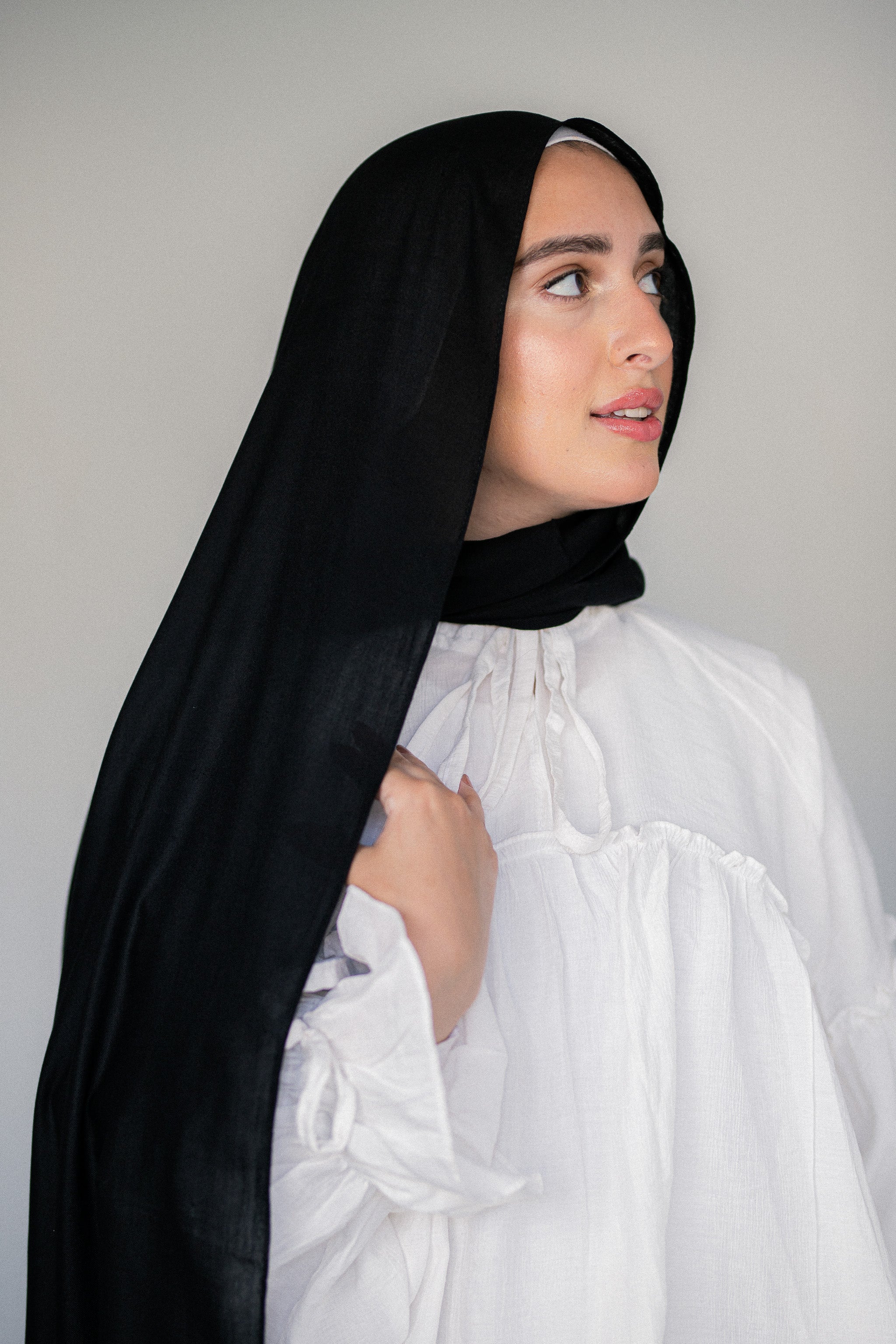
Noir Éclipse Schwarz und Morning Sky Puderblau – atmungsaktiv, matt und von Natur aus rutschfest, sodass sie die ganze Schicht über an Ort und Stelle bleiben. Uniformtaugliche Farben, die sich gut waschen und leicht mit Arbeitskleidung kombinieren lassen.
Noir Éclipse kaufen → Morning Sky kaufen →Wie halte ich meinen Hijab während der Schicht sicher?
Die größte Herausforderung beim Arbeiten mit Hijab ist es, sich auch bei schnellen Bewegungen bedeckt zu halten. Ein Kopftuch, das mitten in einer Tätigkeit verrutscht, lenkt Ihre Aufmerksamkeit genau dann ab, wenn Sie sie auf einen Patienten richten müssen. Drei Dinge sorgen für sicheren Halt:
- Verwenden Sie ein rutschfestes Material. Modal-Baumwolle bietet von sich aus Halt, wodurch das Problem größtenteils gelöst wird, bevor weitere Accessoires benötigt werden.
- Tragen Sie eine gut sitzende Unterhaube. Eine eng anliegende Unterhaube sorgt für sicheren Halt des Hijabs und hält Ihre Haare zurück. Für eine vollständige Bedeckung ohne lose Enden hält ein Modell, das den gesamten Hals bedeckt, alles während der Behandlung an Ort und Stelle.
- Binden Sie Ihr Haar tief und flach zurück. Befestigen Sie es an einem Punkt unter dem Kinn, damit sich beim Bewegen nichts löst.
Dieses Prinzip sorgt für sicheren Halt des Hijabs im Alltag, verstärkt durch einen langen, aktiven Tag. Eine detaillierte Erklärung finden Sie in unserem Leitfaden: Warum Ihr Hijab verrutscht und wie Sie das Problem beheben können.

Sicherer Halt
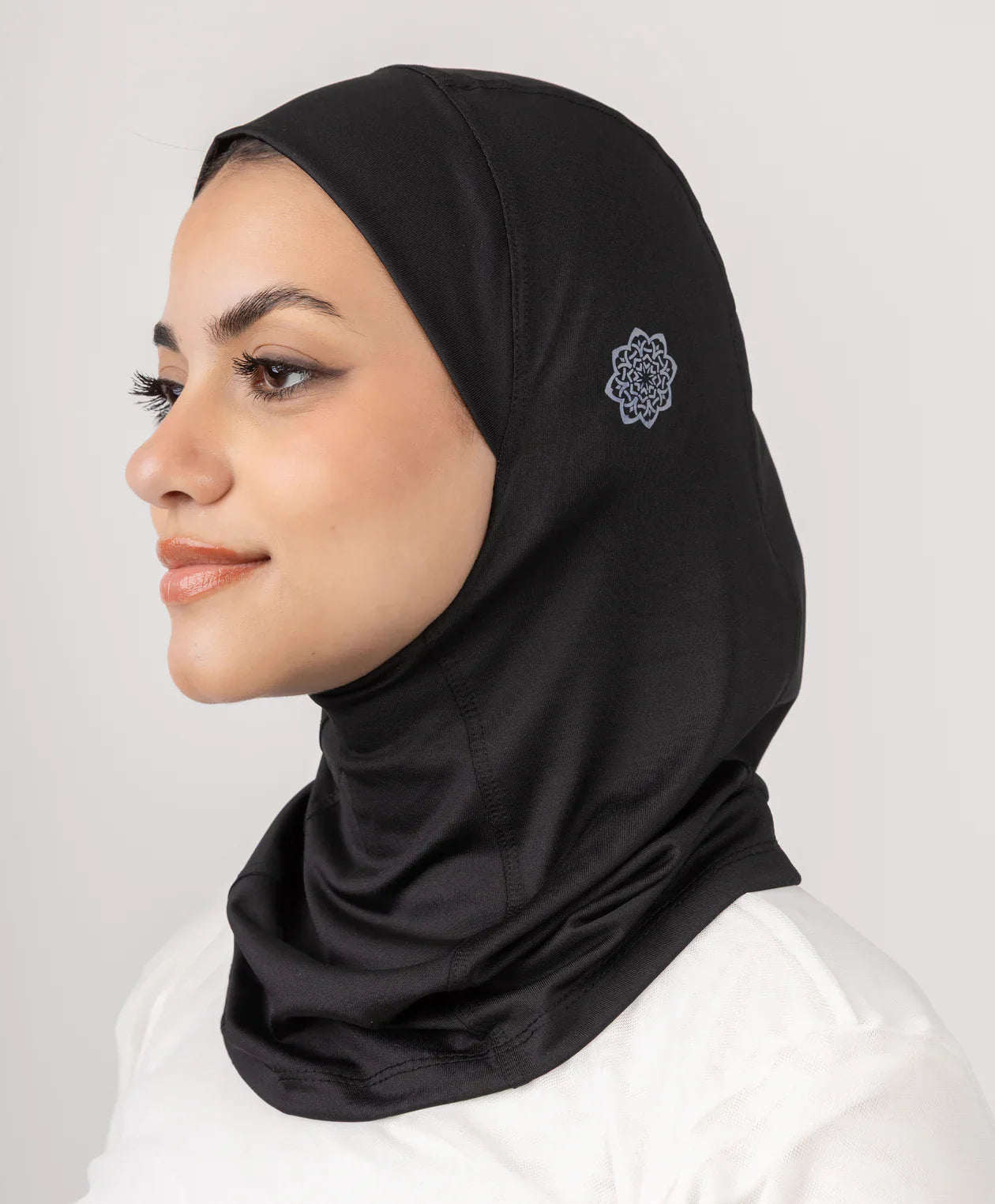
Hals-Untertuch
Vollständige Hals- und Brustbedeckung ohne lose Enden, die sich bei der Patientenversorgung verhaken oder zurechtgerückt werden müssen. Unter dem Hijab getragen, hält es alles sicher an Ort und Stelle – von der Übergabe bis zur nächsten.
Halstuch für den ganzen Hals kaufen →Wie oft und wie sollte ich mein Arbeits-Hijab waschen?
Häufiger als ein Alltags-Hijab. Ein Hijab, der im klinischen Umfeld getragen wird, nimmt deutlich mehr Schmutz auf als einer, den man zum Einkaufen trägt. Behandeln Sie ihn daher wie einen Teil Ihrer Arbeitskleidung: ein frischer, sauberer Hijab für jede Schicht. Halten Sie mehrere Hijabs im Wechsel bereit, damit Sie immer einen sauberen griffbereit haben.
Waschen Sie ihn in kaltem oder warmem Wasser im Schonwaschgang und lassen Sie ihn liegend oder hängend trocknen. Modal-Baumwolle trocknet schnell und behält ihre Form. Vermeiden Sie hohe Temperaturen im Trockner, da diese den Stoff mit der Zeit abnutzen. Durch den einfachen Wechsel mehrerer Hijabs, die nach jeder Schicht gewaschen werden, bleiben Sie sauber und Ihre Kopftücher halten lange.
Wie sieht es im OP oder in sterilen Bereichen aus?
Hier ist Ehrlichkeit wichtig. Für die Arbeit auf Normalstationen, in der Klinik und im direkten Patientenkontakt ist ein sauberer, sicherer Hijab aus Modal-Baumwolle bestens geeignet. Sterile Umgebungen wie der Operationssaal haben ihre eigenen strengen Anforderungen. Manche Krankenhäuser stellen sterile Einweg-Kopftücher speziell für den OP zur Verfügung oder haben eigene Richtlinien zur Kleiderordnung.
Wenn Sie im Rahmen Ihrer Tätigkeit in sterilen Bereichen arbeiten, informieren Sie sich bitte zunächst über die Richtlinien Ihres Krankenhauses und verwenden Sie die dort angebotene sterile Option für diese spezifischen Situationen. Für alle anderen Tätigkeiten während einer normalen Schicht ist Ihr eigener, atmungsaktiver und waschbarer Hijab völlig ausreichend.
Welche Hijab-Farbe ist für Pflegekräfte am besten geeignet?
Schlichte, professionelle Neutraltöne sind die sicherste und vielseitigste Wahl: Schwarz, Weiß oder Elfenbein, Marineblau, Grau und ein sanftes Taupe. Sie wirken gepflegt, passen zu jeder Arbeitskleidung und erfüllen die meisten Kleiderordnungen am Arbeitsplatz. Klären Sie ab, ob Ihr Arbeitgeber bestimmte Farben vorschreibt oder einschränkt, und stellen Sie sich dann eine kleine Auswahl an neutralen Farben zusammen, die zu Ihrer Arbeitskleidung passen. Wenn Sie Hilfe bei der Auswahl passender Farbtöne benötigen, hilft Ihnen unser Ratgeber zu atmungsaktiven Stoffen dabei, herauszufinden, welche Materialien bei wärmeren Temperaturen am kühlsten bleiben.
Fazit
Für die Arbeit in der Pflege und im Gesundheitswesen empfehlen wir einen atmungsaktiven, rutschfesten Modal-Baumwoll-Hijab in einer schlichten, professionellen Farbe. Verwenden Sie für jede Schicht einen sauberen Hijab und fixieren Sie ihn mit einer eng anliegenden Unterhaube und glatt zurückgebundenen Haaren. Chiffon und Satin eignen sich für Ihre freien Tage. Beachten Sie die Richtlinien Ihres Krankenhauses für sterile Bereiche und stellen Sie sich eine kleine Auswahl an neutralen Hijabs zusammen, die zu Ihrer Uniform passen. Wenn Sie die richtigen Kleidungsstücke wählen, ist Ihr Hijab perfekt und Sie können sich voll und ganz auf Ihre Patienten konzentrieren.
Alle Artikel von JAIDA werden noch am selben Tag aus unserem Studio in Ontario versendet. Der Versand innerhalb Kanadas ist ab einem Bestellwert von 99 CAD und in die USA ab einem Bestellwert von 75 USD kostenlos. Sie haben ein 30-tägiges Rückgaberecht.
Atmungsaktive Modal-Baumwoll-Hijabs entdecken →
Sichere Unterhauben entdecken →
Sie arbeiten im klinischen Bereich und benötigen eine Empfehlung für Ihren Arbeitsbereich? Schreib uns eine Nachricht an @myjaida und wir helfen dir gerne weiter. 🤍
Häufig gestellte Fragen
Welcher Hijab-Stoff eignet sich am besten für Krankenschwestern?
Modal-Baumwolle ist der beste Stoff für den Alltag von Krankenschwestern. Er ist atmungsaktiv, rutschfest, pflegeleicht und trocknet schnell. Außerdem ist er in schlichten, professionellen Farben erhältlich, die gut zu einer Uniform passen. Jersey ist eine gute Alternative, besonders als einteiliger Hijab zum Überziehen. Chiffon, Satin und Seide sollten für die Arbeit im Klinikalltag vermieden werden.
Wie halte ich meinen Hijab während einer Schicht im Krankenhaus an Ort und Stelle?
Verwenden Sie am besten einen rutschfesten Stoff wie Modalbaumwolle. Tragen Sie eine eng anliegende Unterhaube, um dem Hijab Halt zu geben und Ihre Haare zu fixieren. Binden Sie Ihre Haare tief und flach zurück, mit einem festen Punkt unter dem Kinn. Eine Unterhaube, die den gesamten Hals bedeckt, bietet zusätzlichen Schutz und verhindert lose Enden während der Patientenversorgung.
Wie oft sollte ich meinen Arbeitshijab waschen?
Tragen Sie für jede Schicht einen frischen, sauberen Hijab, da er im klinischen Umfeld deutlich stärker beansprucht wird als im Alltag. Wechseln Sie mehrere Hijabs regelmäßig, waschen Sie sie im Schonwaschgang mit kaltem oder warmem Wasser und lassen Sie sie liegend oder hängend trocknen. Modalbaumwolle trocknet schnell und ist formbeständig.
Darf ich im Operationssaal einen Hijab tragen?
Das hängt von den Richtlinien Ihres Krankenhauses ab. Sterile Umgebungen wie der Operationssaal unterliegen strengen Hygienevorschriften, und einige Krankenhäuser stellen sterile Einweg-Kopftücher für den OP zur Verfügung. Informieren Sie sich über die Richtlinien Ihres Arbeitgebers und verwenden Sie in diesen Bereichen die von ihm angebotene sterile Option. Für die Arbeit auf Normalstationen und in der Klinik ist Ihr eigener, sauberer und sicherer Hijab ausreichend.
Welche Hijab-Farbe ist für Pflegekräfte am besten geeignet?
Schlichte, professionelle Neutraltöne sind ideal: Schwarz, Weiß oder Elfenbein, Marineblau, Grau und ein sanftes Taupe. Sie wirken gepflegt, passen zu jeder Arbeitskleidung und erfüllen die meisten Kleiderordnungen. Klären Sie ab, ob Ihr Arbeitgeber Farben vorschreibt oder einschränkt, und stellen Sie sich dann eine Auswahl an neutralen Farben zusammen, die zu Ihrer Uniform passen.
Ist ein einteiliger Schlupf-Hijab für die Arbeit im Gesundheitswesen geeignet?
Ja, viele Beschäftigte im Gesundheitswesen bevorzugen einen einteiligen Schlupf-Hijab, da er schnell angezogen werden kann und vor einer Frühschicht einen sicheren und unkomplizierten Sitz bietet. Jersey-Schlupf-Hijabs sind dehnbar und passen sich optimal an. Die wichtigsten Eigenschaften sind die gleichen wie bei jedem anderen Arbeits-Hijab: atmungsaktiv, sicher, vollständig blickdicht, waschbar und angenehm unter einer Maske zu tragen.
Warum sollte ich im Gesundheitswesen keine Chiffon- oder Satinkleidung tragen?
Chiffon und Satin sind rutschig, empfindlich und neigen dazu, Fäden zu ziehen. Daher verrutschen sie bei schnellen Bewegungen und der Patientenversorgung und sind nicht waschbeständig. Sie sehen zwar für besondere Anlässe und die Freizeit wunderschön aus, aber im Arbeitsalltag benötigt man einen praktischen, rutschfesten und strapazierfähigen Stoff wie Modalbaumwolle.

Hinterlasse einen Kommentar
Diese Website ist durch hCaptcha geschützt und es gelten die allgemeinen Geschäftsbedingungen und Datenschutzbestimmungen von hCaptcha.