
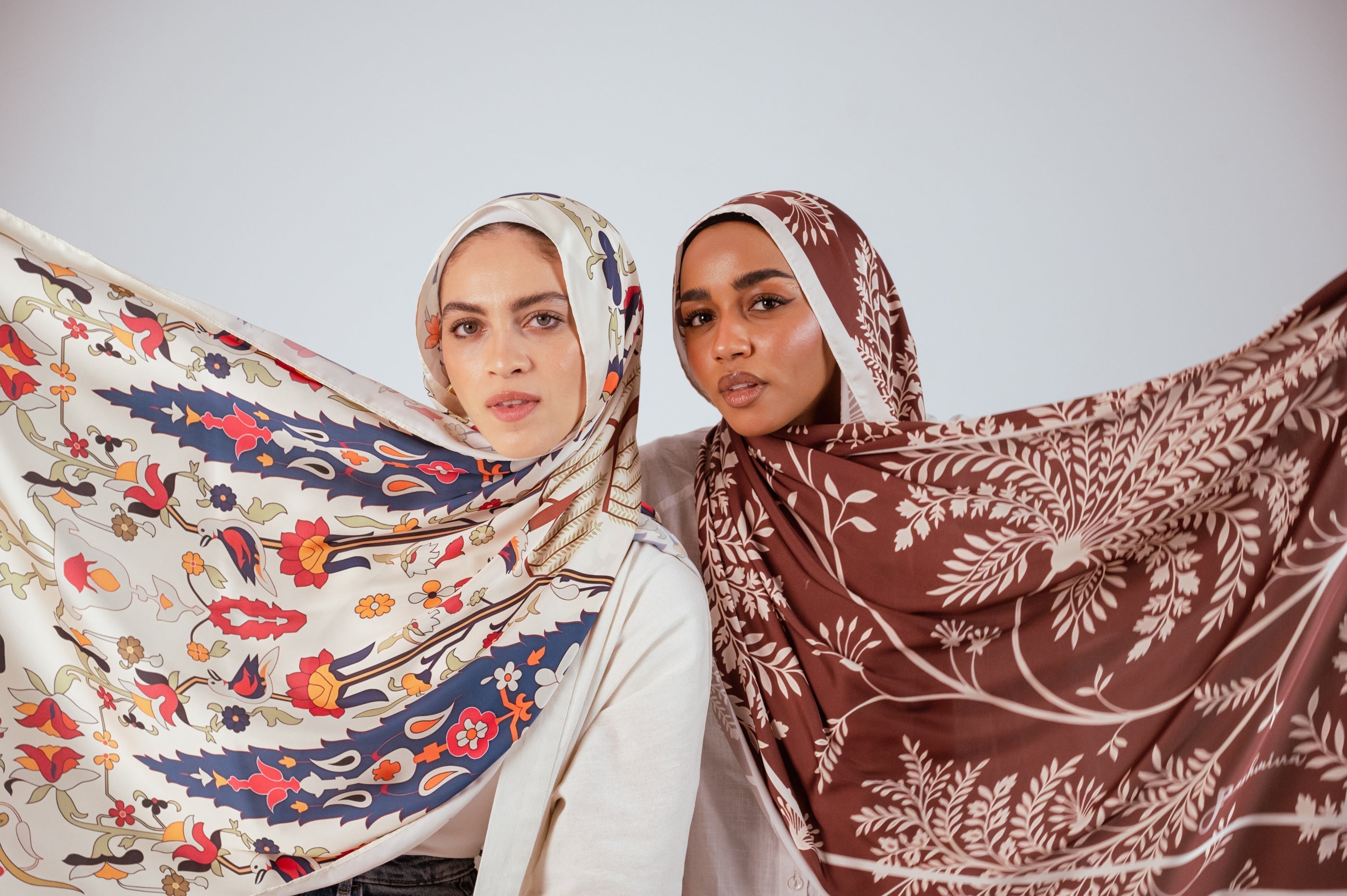
What Size Hijab Should I Buy? Complete Hijab Size Guide (2026)
The best hijab size for most women is 180–200cm in length and 65–75cm in width. A 200×70cm rectangular hijab provides enough fabric for full chest coverage, versatile styling, and comfortable draping. Smaller hijabs (160cm or under) limit styling options and may not provide adequate coverage. When in doubt, choose larger—extra fabric is easy to tuck, but you can't add length to a short hijab.
Check the measurements on an actual product

Hushed Mauve – Luxury Chiffon Hijab
Lilac-to-blush gradient chiffon for a soft colour accent.
View product →That's the quick answer. But if you've ever ordered a hijab online only to find it barely covers your chest—or wondered why sizing varies so much between brands—this guide explains everything you need to know about hijab dimensions, shapes, and how to choose the right size for your styling needs.
Understanding How Hijab Sizing Works
Unlike clothing, hijabs don't come in small, medium, or large. Instead, they're measured by length × width in centimeters.
For example, a hijab labeled "200×70cm" means:
- 200cm = the length (how long the hijab is)
- 70cm = the width (how wide/deep the hijab is)
Length determines how much fabric you have for wrapping and draping. Width determines how much coverage you get from front to back.
Why Sizing Varies Between Brands
There's no industry standard for hijab sizing. One brand's "standard" might be 170×60cm. Another's might be 185×70cm. This is why checking dimensions matters more than trusting size labels.
Some brands cut corners on fabric to reduce costs—resulting in hijabs that look fine in photos but leave you struggling for coverage in real life.
At JAIDA, all our hijabs measure 200×70cm—larger than most brands—because we've found this size eliminates the frustration of "almost enough" fabric.
Hijab Size Breakdown: Small to Large
Small/Short Hijabs (160cm and Under)
Typical dimensions: 150–160cm length × 50–60cm width
What to expect:
- Limited wrapping options
- May not fully cover chest
- Works only for minimal, simple styles
- Can feel tight or restrictive
Best for: Very minimal styles, layering under other pieces, or petite frames who prefer less fabric.
Our take: Unless you specifically want a minimalist look, small hijabs often create more frustration than they're worth.
Medium/Standard Hijabs (170–185cm)
Typical dimensions: 170–185cm length × 60–70cm width
What to expect:
- Adequate for most basic styles
- Provides reasonable coverage
- May feel limiting for wrapped or layered looks
- Works for everyday wear
Best for: Simple everyday styling, women who prefer less fabric to manage.
Our take: This is where most brands land—it's "fine" but not generous.
Large/Generous Hijabs (190–200cm+)
Typical dimensions: 190–200cm length × 70–75cm width
What to expect:
- Full coverage front and back
- Room for wrapping, layering, and dramatic drapes
- More forgiving of styling variations
- Elegant, flowing look
Best for: Full coverage styling, versatility across multiple styles, women who want options.
Our take: This is the sweet spot. Extra fabric tucks away easily, but you can't add length to a short hijab.
Size Comparison Table
| Size Category | Length | Width | Coverage Level | Best For |
|---|---|---|---|---|
| Small | 160cm or less | 50–60cm | Minimal | Simple styles only |
| Medium/Standard | 170–185cm | 60–70cm | Moderate | Everyday basics |
| Large/Generous | 190–200cm+ | 70–75cm | Full | Versatile styling |
Rectangular vs Square Hijab: What's the Difference?
Hijabs come in two main shapes, and each works differently.
Rectangular Hijabs
Typical size: 180–200cm length × 65–75cm width
How it works: The long, narrow shape is designed for draping and wrapping. You place it on your head and work with the length to create your style.
Pros:
- Easiest shape for most everyday styles
- Natural for wrapping around neck and shoulders
- Works for simple and complex styles alike
- Most versatile shape overall
Cons:
- Not ideal for Turkish-style pinned looks
Best for: Everyday wear, most draping styles, beginners
Square Hijabs
Typical size: 110×110cm or 140×140cm
How it works: You fold the square diagonally into a triangle, then pin or drape from there. Creates a more structured, angular look.
Pros:
- Traditional Turkish/structured styling
- Creates clean, geometric shapes
- Works well with pins for precise placement
Cons:
- Less versatile than rectangular
- Requires different styling techniques
- Can be bulkier at the neckline
Best for: Turkish style, structured formal looks, specific aesthetic preferences
Comparison: Rectangular vs Square
| Feature | Rectangular (200×70cm) | Square (110–140cm) |
|---|---|---|
| Shape When Worn | Draped, flowing | Triangular, structured |
| Ease of Styling | Easier for most styles | Requires specific technique |
| Versatility | High | Moderate |
| Best For | Everyday, most occasions | Turkish style, formal |
| Beginner Friendly | Yes | Moderate learning curve |
Our recommendation: If you're building a versatile hijab wardrobe, rectangular hijabs (like JAIDA's 200×70cm) work for the widest range of styles and occasions.
How to Choose the Right Hijab Size for Your Needs
Best Hijab Size for Full Coverage
If full chest and back coverage is your priority, look for:
- Length: At least 185cm, ideally 200cm
- Width: At least 70cm
This gives you enough fabric to wrap comfortably while maintaining coverage throughout the day—even when moving, reaching, or adjusting.
Best Hijab Size for Minimal Styles
If you prefer less fabric and simpler styling:
- Length: 170–180cm works fine
- Width: 60–65cm is sufficient
Just know that you'll have fewer styling options with smaller dimensions.
Best Hijab Size for Layered and Wrapped Looks
For styles that involve wrapping around your neck or creating layered drapes:
- Length: 190–200cm minimum
- Width: 70cm or more
The extra length is essential—otherwise you'll run out of fabric mid-wrap.
Does Body Size Affect Hijab Size Choice?
Somewhat, but less than you might think.
Taller women and those with broader shoulders may find 200cm lengths more comfortable for full coverage. Petite women can absolutely wear larger hijabs—the extra fabric simply drapes more dramatically or tucks away.
The bigger factor is styling preference, not body size. A petite woman who loves wrapped, layered looks needs the same generous sizing as anyone else.
Does Face Shape Affect Hijab Size?
Face shape affects styling more than sizing. The right size gives you options to style in ways that flatter your face—whether that's framing closely or draping loosely. For style techniques tailored to your features, see our hijab styles by face shape guide.
With generous sizing (200×70cm), you have the flexibility to adjust based on what flatters you.
Why We Use 200×70cm at JAIDA
The Problem with Undersized Hijabs
We've heard the same frustration from too many women: "I bought a hijab online and it's too small."
Undersized hijabs create real problems:
- Constant adjusting because there's not enough fabric to secure properly
- Chest or back showing when you move or reach
- Limited styling options—you can only do the simplest looks
- The hijab rides up throughout the day
- Feeling self-conscious instead of confident
Why Bigger is Actually Easier to Style
It might seem like more fabric = more complicated. The opposite is true.
With generous sizing:
- You have room to adjust and perfect your drape
- Extra fabric tucks away easily
- Coverage stays consistent even when moving
- You can do simple OR complex styles with the same hijab
- Mistakes are forgiving—you have fabric to work with
With undersized hijabs, you're fighting the fabric instead of working with it.
Our Sizing Philosophy
Every JAIDA hijab—whether chiffon, satin, or modal—measures 200×70cm. We chose this size after testing what actually works for real styling, real coverage, and real daily wear.
It's not about having "extra" fabric. It's about having enough.

Generously Sized, 200×70cm
Night Dunes – Luxury Chiffon Hijab
One of our most-loved pieces, cut to the full 200×70cm — enough fabric to wrap, layer, and drape with coverage that holds all day.
See Night Dunes →Shop All JAIDA Hijabs (200×70cm) →
Common Sizing Mistakes to Avoid
Mistake #1: Buying Too Small for Your Desired Style
If you want wrapped, layered, or dramatically draped looks, you need generous fabric. A 165cm hijab won't do what a 200cm hijab does—no matter how skilled your styling.
The fix: Match your size to your styling goals. Full coverage and versatility require 185cm+ length.
Mistake #2: Assuming All Brands Size the Same
"Standard size" means nothing. One brand's standard is another brand's small. Always check actual dimensions before ordering.
The fix: Look for specific measurements (length × width in cm), not vague size labels.
Mistake #3: Not Checking Dimensions Before Ordering
Photos can be deceiving. A hijab can look generous on a model but measure 160×55cm in reality.
The fix: Find the dimensions on the product page or ask before buying. If a brand doesn't list dimensions, that's a red flag.
Frequently Asked Questions
What is the standard hijab size?
Most hijab brands sell rectangular hijabs between 170–185cm in length and 55–70cm in width. However, many women find this limiting and prefer larger sizes (190–200cm) for fuller coverage and more styling flexibility.
Is a bigger hijab harder to style?
No—larger hijabs are often easier to style because you have more fabric to work with. You can always tuck or drape extra fabric, but you can't add length to a hijab that's too short. Generous sizing gives you options.
What size hijab is best for full coverage?
For full chest and back coverage with comfortable draping, choose a hijab at least 180cm in length and 70cm in width. A 200×70cm size provides even more room and works for wraparound styles, layering, and dramatic drapes.
What's the difference between rectangular and square hijabs?
Rectangular hijabs (like 200×70cm) are designed for draping and wrapping—ideal for everyday styles. Square hijabs (usually 110×110cm or 140×140cm) are folded into a triangle and work best for Turkish-style pinned looks or structured drapes.
What size hijab does JAIDA sell?
All JAIDA hijabs measure 200×70cm—larger than most brands. This size provides generous coverage, easier styling, and a more elegant drape without the frustration of fabric that's too short.
What hijab size for Turkish hijab style?
Traditional Turkish style uses large square hijabs (110–140cm per side), folded diagonally and pinned. For a draped Turkish-inspired look with rectangular hijabs, choose at least 180–200cm length for adequate fabric.
Can I use a small hijab for everyday wear?
Yes, if your style is minimal. However, smaller hijabs (160cm or under) limit your styling options and may not provide full chest coverage. If you prefer versatility, opt for larger sizing.
Does my body size affect what hijab size I should buy?
Somewhat. Taller women and those with broader shoulders may find 200cm+ lengths more comfortable for full coverage. However, hijab size is more about styling preference and coverage goals than body size—most women benefit from generous sizing regardless of frame.
Size Recommendation Summary
| Your Goal | Minimum Size | Ideal Size |
|---|---|---|
| Basic everyday styling | 170×65cm | 185×70cm |
| Full coverage all day | 185×70cm | 200×70cm |
| Wrapped/layered styles | 190×70cm | 200×75cm |
| Maximum versatility | 190×70cm | 200×70cm |
When in doubt, go larger. You'll never regret having enough fabric—but you'll definitely notice when you don't.
Shop the Right Size
Every JAIDA hijab is designed with generous 200×70cm sizing—so you never have to wonder if you'll have enough coverage.
Shop Chiffon Hijabs (200×70cm) →
Shop Satin Hijabs (200×70cm) →
Shop Modal Hijabs (200×70cm) →
Questions about sizing? DM us @myjaida — we're happy to help you find the perfect fit. 🤍


Leave a comment
This site is protected by hCaptcha and the hCaptcha Privacy Policy and Terms of Service apply.